COP31 Leaders Urge Faster Climate Action as Clean Energy Surges and Adaptation Funding Falls Short
November 11, 2026


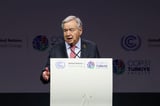
At COP31’s opening in Antalya, Turkey, U.N. Secretary-General António Guterres urged leaders to move urgently on global warming by reducing reliance on fossil fuels, adapting to climate impacts, financing support for poorer countries and strengthening international cooperation.
Brazil President Luiz Inácio Lula da Silva pledged to protect the Amazon and warned that wars, inflation and geopolitical tensions have pushed climate change down the global agenda; he said attention had shifted toward weapons and tariffs since COP30.
Erdogan argued that conflict, migration, famine and poverty make international solidarity more urgent.
Stiell said international cooperation helped bring projected warming down from well above 4°C before the Paris Agreement to about 2.6°C and made clean-energy investment larger than fossil-fuel investment, while stressing that vulnerable countries still need greater support.
Figures presented by Germany’s state development bank KfW show that investment in clean energy and electrification is expected to reach €2 trillion in 2026, nearly twice the amount invested in coal, oil and gas.
Guterres pointed to clean technology’s rapid expansion: solar provided nearly three-quarters of the increase in global electricity demand last year, and electric vehicles are expected to account for almost one in three cars sold this year.
COP31 priorities include electrification, adaptation and resilience, and fairer access to climate finance; the conference aims to lift electricity’s share of final energy consumption from about one-fifth to one-third, while developing countries need simpler, faster funding to turn plans into projects.
The financing gap remains stark: UN Environment Programme data indicate that adaptation receives only about $1 for every $12–$14 needed.
African voices say they remain underrepresented in climate decision-making, with funding and technology often controlled by the Global North.
South Africa produces more than 40% of Africa’s emissions, while the rest of the continent has an opportunity to leapfrog dirty or expensive energy sources through sustainable renewables.
Communities are already putting local solutions into practice through RACR-supported water and food security initiatives in Eastern Cape and Limpopo, as well as community solar projects in Nomzamo, Mpumalanga.
Mia Mottley warned that every five-year delay adds about 0.1°C to projected peak warming, citing more than 1,400 deaths in Nepal’s August floods and thousands still missing.
Summary based on 32 sources
Get a daily email with more World News stories
Sources
Yahoo News • Nov 11, 2026
War, conflict must not distract from climate action, leaders warn COP31
AP News • Nov 11, 2026
At UN climate talks, Turkish president calls Gaza war an 'ecoside' | AP News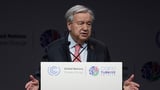
The Hindu • Nov 11, 2026
COP31 leaders urge focus on climate action despite global conflicts
NHK WORLD • Nov 11, 2026
UN chief calls for speeding efforts against climate change