Japan and South Korea Tighten Crypto Regulations, Reclassify as Financial Products to Protect Investors
July 17, 2026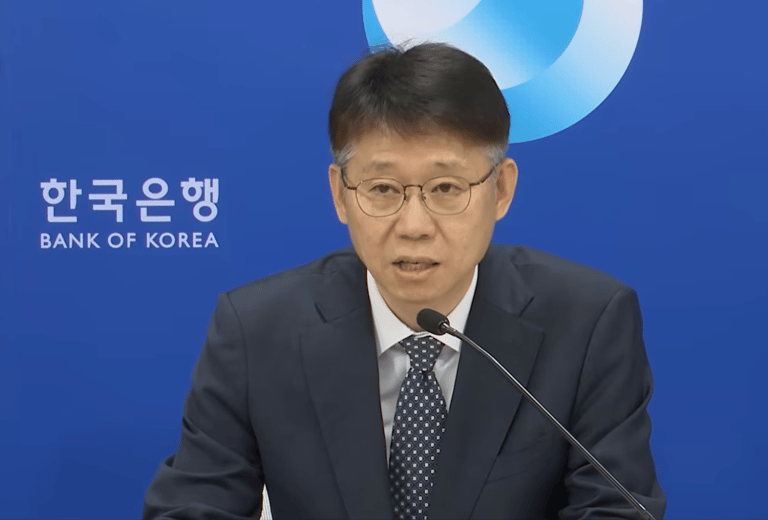

This regulatory push comes as markets grapple with a downturn, yet both economies formalize crypto’s role in their financial systems, potentially setting the stage for institutional involvement.
Macro motivations for crypto adoption include Japan’s large household savings and Korea’s policy moves, though regulatory clarity alone doesn’t guarantee demand or immediate capital inflows.
Despite the regulatory convergence, it remains unclear whether crisis conditions will channel capital into crypto, even as institutions eye potential participation.
Korea accounts for a sizable share of global crypto activity, with won-denominated trades forming about 30% of spot volume in 2026, millions of active Korean digital asset users, and a concentration of activity around Upbit and Bithumb, dominated by altcoins.
Korea’s broader digital asset agenda includes the Digital Asset Basic Act, which would govern issuance, trading, custody, licensing, and reserves, but stalled over stablecoin rules and aiming for a second-half 2026 resolution.
South Korea advances a National Asset Basic Act to formally include digital assets in state wealth, expanding holdings to tokenized government bonds and security tokens for public real estate, with a goal of official integration into public asset management.
Embedding crypto in sovereign asset statutes marks a historic precedent that could shape future regulation and market architecture, and Japan’s concurrent enactment underscores a broader move toward formal financial treatment of digital assets.
Hangang project and related infrastructure support Korea’s ambitions, including a 2027 tokenized government bonds pilot tied to the Bank of Korea’s CBDC and an eight-month Gyeonggi stablecoin pilot testing zero-knowledge proof stablecoins for regional payments.
Japan and South Korea are both moving forward with stricter crypto regulation, with Japan reclassifying crypto as financial products under a new framework to protect investors, require disclosures, curb insider trading, and impose a 20% tax starting in 2028, while considering the potential for domestic spot crypto ETFs pending approvals.
On the same day, Japan enacted reforms under the Financial Instruments and Exchange Act to align crypto with traditional financial assets like stocks and bonds, strengthening disclosure, insider-trading prohibitions, and penalties, and facilitating the possibility of future spot crypto ETFs alongside a tax cut from a top rate of 55% to 20% in 2028.
Analysts warn that high leverage and margin debt in Korea could amplify market volatility and echo past turmoil, drawing comparisons to China’s 2015 episode and affecting sentiment across Asia.
A new act could replace a long-standing 1950 State Property Act to allow government custody, valuation, and active management of crypto holdings, signaling a shift toward sovereign asset management, though it has not yet passed the National Assembly.
Summary based on 3 sources
Get a daily email with more Crypto stories
Sources

CryptoRank • Jul 17, 2026
Panic Hits Japan and South Korea Markets: Can Crypto Become the Big Winner?
BeInCrypto • Jul 17, 2026
Panic Hits Japan and South Korea Markets: Can Crypto Become the Big Winner?
Tech Times • Jul 16, 2026
South Korea Folds Crypto Into National Asset Law as Japan Passes Its Own Reform