Blockchain Revolution: Healthcare Market Set for $62B Growth by 2033 with Cybersecurity, Interoperability Focus
September 28, 2026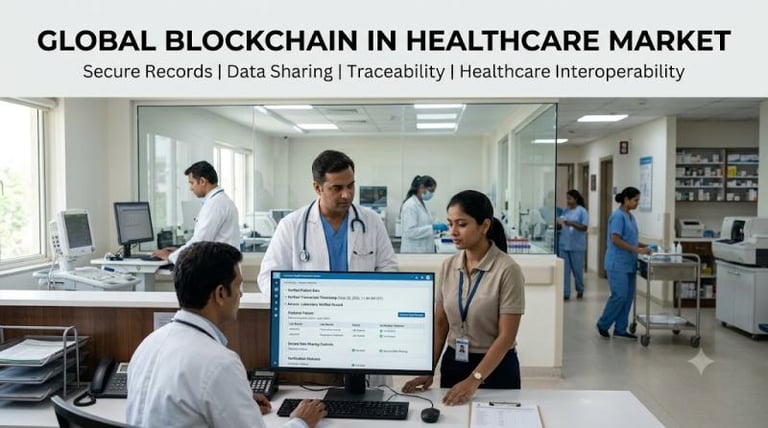

Growth in blockchain-enabled healthcare hinges on stronger cybersecurity, digital identity management, clinical-data sharing, and robust pharmaceutical supply-chain traceability within interoperable ecosystems.
Key market applications focus on Clinical Data Exchange & Interoperability, Claims Adjudication & Billing, Supply Chain Management, Remote Patient Monitoring, and Clinical Trials & R&D, with data exchange and provenance at the forefront.
The US strategic landscape features investments in health-data interoperability, digital identity, claims processing, and pharmaceutical traceability, with major players weaving blockchain into existing EHR and payer systems.
Recent developments include advancing interoperability standards for data exchange, Oracle Health achieving CMS Aligned Network status for better health-data connectivity and patient-controlled access, a shift to permissioned blockchains with strong cryptography, TEFCA exceeding one billion health records exchanged, and USCDI Version 7 broadening interoperability.
Deployment models are primarily cloud-based for scalability and easier app integration, while on-premises options remain relevant for sensitive data governance.
End users span healthcare providers, payers, pharma and biotech, medical device makers, and public health agencies, leveraging blockchain for provenance, traceability, consent management, and controlled access.
Growth opportunities exist in Japan and Germany, driven by healthcare digitalization, data exchange needs, digital identity, and secure multi-party data sharing with supply-chain transparency.
Strategic growth is fueled by partnerships, M&A, and expanding enterprise blockchain across healthcare data platforms, cloud, AI, and interoperability frameworks.
The global blockchain in healthcare market is projected to grow from about USD 5.23 billion in 2025 to roughly USD 62.19 billion by 2033, a CAGR near 37% driven by secure data exchange, interoperability, and transparent healthcare transactions.
Summary based on 1 source