








April 13, 2026
VW Group's Q1 2026 vehicle deliveries dropped by 4% to 2.05 million, with notable declines in China and North America. Amidst increased competition, VW focuses on new models and partnerships to regain market share, especially in China.
The Iran conflict is accelerating the global shift to clean energy, benefiting China as a leader in green tech exports like batteries and solar panels. Despite geopolitical tensions and trade barriers, increasing demand for renewables may reshape global energy markets, enhancing China's competitive edge.
Slate Auto secures $650 million in Series C funding to accelerate production of its cost-effective Slate Truck, aiming for mid-$20,000 pricing before incentives with deliveries by late 2026. The funds will support factory upgrades in Indiana as Slate plans for a minimalist EV approach, despite market uncertainties like tax credit expirations.
Tesla's latest software update enhances safety, convenience, and personalization, featuring improved energy tracking, display upgrades, and media controls. The update also introduces a revamped Self-Driving app for AI4 cars, while European rollout of FSD in the Netherlands points to broader EU approval.
Mercedes unveils a major update for its EQS, introducing an 800-volt architecture that enables rapid charging and extends range to a class-leading 575 miles. The update also features a new steer-by-wire system, enhanced AI integration, and extensive customization options, with a US launch anticipated for late 2026.
Twenty university teams have been chosen for the EcoCAR Innovation Challenge, focusing on developing the Chevy Blazer EV and Jeep Cherokee hybrid. The initiative, backed by GM, Stellantis, and MathWorks, aims to bridge the skills gap in the auto industry by integrating real-world engineering, software, and customer experience.
The 2026 electric bike market sees the Royal Enfield Flying Flea C6 vying against Ola Roadster X+ for urban appeal and commuting efficiency. Key differentiators include range, design, and pricing, with the Roadster X+ offering a modern tech-forward approach and the Flying Flea C6 emphasizing retro aesthetics.
Santa Monica's Big Blue Bus is investing $56 million to expand its battery-electric fleet, aiming for a fully zero-emission system by 2032. Funded mainly by a $53.3 million state grant, the project promises reduced emissions, cost savings, and job creation, aligning with the city's sustainability goals.
Surf Air has agreed to purchase 25 Alia electric aircraft from Beta Technologies for operations in Hawaii, with an option for 75 more, highlighting a push towards sustainable aviation. This deal, announced April 12, 2026, aims to reduce carbon emissions and lower operating costs, making electric aviation a viable solution for Hawaii's high-cost travel market.
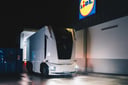
Saint-Gobain UK is beginning a five-year zero-carbon logistics trial with six electric VOLVO e-HGVs at their Midlands hub. The initiative, in collaboration with XPO Logistics, aims to cut CO2 by 3,530 tonnes over five years with a focus on sustainable expansion across Europe.
Electric aircraft test flights commence at Kitakyushu Airport on April 17, backed by Beta Technologies and Sojitz Corp., aiming for decarbonized cargo transport in Kyushu. The initiative, part of Japan’s green aviation push, focuses on overcoming battery and regulatory hurdles while exploring future passenger services.
In response to geopolitical tensions affecting supply chains, officials emphasize efforts to stabilize auto sector logistics and promote cleaner energy sources. The government is enhancing domestic production with significant investments in rare earth magnets and extending EV subsidies, aiming for resilience and reduced LPG dependency.
Uber, Nuro, and Lucid Motors are testing six-seat autonomous SUV robotaxis in San Francisco, aiming for public launch later this year. The collaboration targets Waymo with hopes of deploying 100,000 units in the U.S. by early 2027.
China's smart-driving leaders are racing towards first-echelon status in L2+ driving, focusing on urban NOA and map-free capabilities as key milestones. Huawei tops the market with its Qiankun Intelligent Driving ADS, leading in urban NOA share and installations, emphasizing full-stack development and cost-effective, map-free solutions.
The 18th China International Battery Fair (CIBF2026) in Shenzhen will highlight China's dominance in battery technology and its commitment to zero-carbon industrial parks. The event, running May 13-15, will feature over 3,100 exhibitors and focus on energy storage, recycling technologies, and intelligent manufacturing, with participation from over 2,000 experts and industry leaders.
The lithium-ion battery market is surging due to increased demand from electric vehicles and energy storage, driven by advances in battery chemistry and government policies. Key factors include EV production growth, energy density improvements, and investments in manufacturing, with regional insights highlighting a global push for renewable integration.
Germany rejects a unilateral Brussels vote, advocating flexibility to protect the EU market and jobs, while supporting electric vehicles. Chancellor Merz emphasizes a unified approach in upcoming EU negotiations on the combustion engine phase-out, stressing job protection and market balance against China.
Cadillac's F1 chief confirms GM will develop its own power unit for Cadillac's entry into Formula 1 by 2029, transitioning from Ferrari's engines. This move will see Cadillac evolve into a works team, navigating regulatory changes to ensure its own power unit debuts on time, with Ferrari support until 2028.
India is ramping up its electric vehicle sector with a comprehensive strategy combining PM E-DRIVE and rare earth magnet initiatives to bolster domestic manufacturing and reduce import reliance. This multi-faceted approach is designed to enhance the EV supply chain, control costs, and stabilize the market while promoting sustainable growth within the industry.
The government has proposed a more gradual tightening of CAFE norms from 2027 to 2032, emphasizing a phased compliance curve to ease the auto industry's transition. This approach includes credit trading and super credits for EVs and hybrids, aiming to balance industrial flexibility with environmental goals.