Renowned Photographer Martin Parr Dies at 73, Leaves Behind a Satirical Legacy
December 7, 2025


His legacy endures as a comprehensive visual archive tracing the evolution of 20th- and 21st-century society through beaches, pools, parties, and global resorts, inviting ongoing reflection on cultural norms.
In interviews, Parr emphasized that the essence lies in tiny, ordinary moments, and that tenderness often underpins his gaze amid surreal or cruel modern life.
Media coverage, including the BBC, highlighted Parr’s famous series and exhibitions focused on beaches, tourism, and consumer culture.
Across his career, Parr aimed to critique modern consumer culture, exposing indulgence and body imagery while navigating a complex relationship with British society during Brexit-era debates.
(No content provided in source for this point; omitted to avoid repetition.)
He focused on everyday British life and leisure—from chip shops to queues—illuminating class, place, longing, and the small stories embedded in daily rituals.
His later subjects encompassed garden parties, village fetes, public pools, and climate-themed collaborations with Oxfam; Black Country Stories explored immigration and regional renewal.
Parr’s influence is evident in high-profile exhibitions and cultural mentions, including musicians referencing his work and album cover collaborations.
Parr frequently explored the tension between tourists’ mythologies and real environments, with a 2025 Paris retrospective planned to address climate change and overtourism.
He faced a cancer diagnosis in 2021 but continued creating, including self-portraits that reflect his self-deprecating humor.
Context of Parr’s work spans mass tourism, consumer culture, and Western elites’ lifestyles, highlighting the breadth of his documentary practice.
His shift from black-and-white to color in 1982 was controversial and driven by a commitment to portraying truthful, sometimes bizarre aspects of life without embellishment.
Early captions trace a shift from intimate family scenes to broader urban life, foreshadowing the social documentary approach he became known for.
Parr worked as a curator and educator, serving as visiting professor at Ulster University from 2013 onward.
Overall, Parr’s legacy is that of a lifelong project to document and critique social change, leisure, and consumer culture through a distinctive, vividly colored documentary style.
Parr rose to prominence in the mid-1980s, gaining fame for his early breakthroughs and ongoing influence.
He published numerous photobooks, did fashion shoots for Vogue and Gucci, and influenced photography with his approach to color and culture, balancing crassness and curiosity.
Readers can explore Parr’s life and work further through his 2023/2024 autobiography and related SPIEGEL content.
A range of 1970s street scenes across British towns show the evolution of Parr’s observational style and interest in crowds.
Early portraits and prize-winning images from the late 1960s and 1970s illustrating the emergence of Parr’s recurring themes.
Born in 1952 in Epsom, Parr’s complicated relationship with Britain balanced affection with critique of cultural quirks.
His notable series, The Last Resort, The Cost of Living, Small World, and Common Sense, examined class, tourism, and consumer culture across decades.
While his work drew both admiration and critique for its provocative, sometimes kitschy portrayal of contemporary society, Parr’s influence extended beyond photography enthusiasts.
Critics debated the ethics and tone of his documentary approach, yet Parr consistently challenged conventional boundaries with unvarnished scenes.
Martin Parr, the celebrated British photographer known for oversaturated color and sharp, humorous depictions of everyday life, has died at 73 in Bristol, with his passing announced by his foundation and Magnum Photos.
Parr helped shape photography festivals and exhibitions, curating events such as the Arles Festival in 2004, the Brighton Photo Biennial in 2010, and a 2016 exhibition at the Barbican Centre in London.
His foundations will collaborate with Magnum Photos to preserve and share Parr’s legacy, underscoring the lasting impact of his body of work.
His autobiography, Utterly Lazy and Inattentive, signals a self-deprecating, provocative stance that mirrors the breadth of his career.
Parr described his subjects as “the normal people,” using humor and a sometimes abrasive tone to probe social norms and daily life.
The New Brighton project blended joyful moments with neglected realities, provoking discussion about northern towns’ conditions and audiences’ awareness.
Parr was famed for making the mundane vivid, capturing small details of daily life, and he has warned that the world’s current state and consumption are unsustainable.
His work offers a satirical, insightful view of globalization, inequality, and consumer culture, often read as a critique of modern society.
Recurring elements in Parr’s work include bystanders, sleeping figures, and candid street moments that became recognizable signatures.
Parr’s work spanned social spectra, from sunbathers and working-class life to middle-class rituals and international commentary on tourism and consumerism.
Subsequent projects such as The Cost of Living, Small World, and Common Sense continued to critique modern life’s subtleties like suburbia, mass tourism, and global consumer culture.
The article introducing Parr was edited by Sroban Ghosh.
The breakthrough moment came with The Last Resort (1986), a three-summer project in New Brighton that shocked audiences with stark realism.
Parr showcased work in France in 2012, signaling strong engagement with French audiences and institutions.
His distinctive style features close-up shots, bold flash, and a recognizably British sensibility.
Parr was celebrated for documenting Britain's working-class holidays and queues in oversaturated colour with empathy for his subjects.
A solo exhibition, Martin Parr. Short & Sweet, at Milan’s MUDEC in 2024, reflected decades of work as a mirror of the world.
A documentary, I Am Martin Parr, chronicles his fifty-year body of iconic images and portrays him as a modest artist practicing photography as meditation.
A central claim is that society has grown wealthier and more consumption-driven, a theme that runs through his work.
Despite traveling to Benidorm, Mexico City, Dakar, Moscow, and Pyongyang, Parr remained rooted in documenting British life and its idiosyncrasies.
Parr acknowledged controversy around New Brighton work, noting that southern observers blamed northern realities on those photographed.
The piece situates Parr within a broader conversation about photography as social critique, especially of tourism and consumer culture.
Parr pursued photography as a meditative practice, drawing inspiration from Vivian Maier and maintaining curiosity and wakefulness in his work.
Key career milestones include training at Manchester Polytechnic, early work with Butlin’s, controversial projects, joining Magnum Photos in 1994, and serving as Magnum president from 2013 to 2017.
Summary based on 59 sources
Get a daily email with more World News stories
Sources
The Guardian • Dec 7, 2025
Martin Parr, photographer acclaimed for observations of British life, dies aged 73
The Guardian • Dec 7, 2025
‘He made the mundane magnificent’: Martin Parr could make a chip shop as mighty as a cathedral
BBC News • Dec 7, 2025
Photographer Martin Parr dies aged 73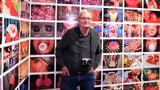
CNN • Dec 7, 2025
British documentary photographer Martin Parr dies at 73