Poland Urges EU to Rethink Defense Financing Amid US Ties Shift
February 24, 2025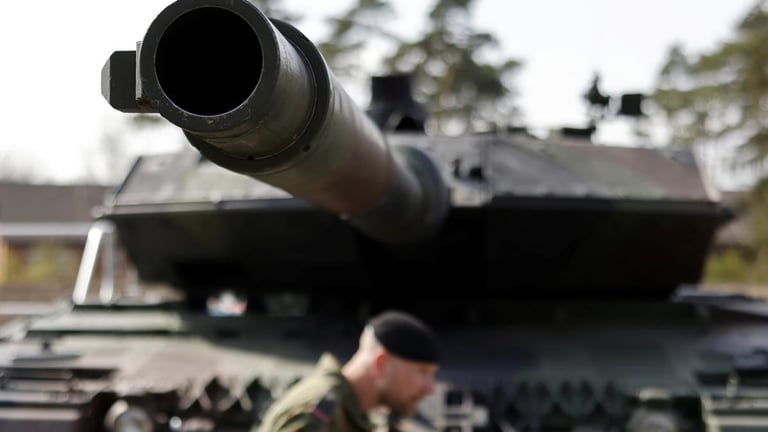

Amid rising security concerns, there is an urgent call for Europe to finance its own defense, particularly in light of shifting relations with the United States.
In response to these challenges, Polish Finance Minister Andrzej Domański has proposed changes to EU debt rules that would allow military spending without affecting national deficit calculations.
Domański also suggested establishing a new funding mechanism for joint military procurement among EU states, which could help transition the bloc towards a military union.
Countries like France, Spain, Italy, and Greece are advocating for Eurobonds to collectively finance military purchases, although this proposal faces opposition from Germany.
The European Commission is set to outline various financing options for European defense by mid-March, potentially reallocating funds from the €800 billion COVID-19 recovery fund.
Another idea on the table is for the European Investment Bank (EIB) to finance weapons procurement, although current regulations restrict its role to dual-use goods.
An analysis reveals that the EU would need an additional €250 billion annually to adequately defend itself against Russia without US support, which includes the establishment of 50 brigades and the acquisition of thousands of new military vehicles.
Despite some gaps in military capabilities, European tank manufacturers remain competitive globally, often supplying the US military, although many required weapons systems are still sourced from the US due to insufficient domestic production.
European air defense capabilities are notably limited, relying heavily on US technology and systems, highlighting a critical area for improvement.
A recent informal meeting at the Élysée Palace included key leaders such as German Chancellor Olaf Scholz and UK Prime Minister Keir Starmer, who both advocated for increased military budgets.
While Scholz supports increasing military budgets, he stipulates that this should only apply to countries already spending more than 2% of their GDP on defense, in line with NATO guidelines.
Domański concluded with a strong message that Europe must overcome its financial hurdles to ensure the security of its citizens, or risk failing as a democracy.
Summary based on 1 source