EU Eases Syria Sanctions to Aid Reconstruction Post-Assad, Demands Democratic Reforms
February 25, 2025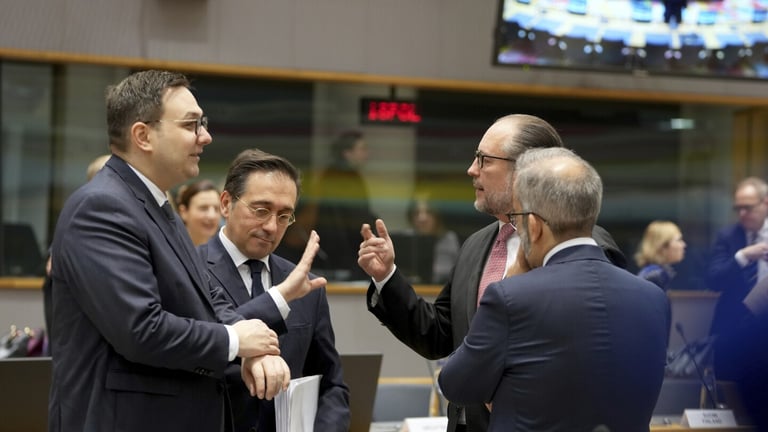

Syria's new leaders, including interim president Ahmad al-Sharaa, have urged the West to lift sanctions, highlighting the urgent need for economic recovery after years of civil war.
Following Assad's ousting in December 2024 by a rebel alliance led by Hayat Tahrir al-Sham (HTS), a transitional government was established in Damascus.
On February 24, 2025, the European Union announced an easing of sanctions on Syria's energy, transport, and banking sectors to support the country's reconstruction following the ousting of Bashar al-Assad.
EU foreign ministers emphasized that the easing of sanctions is linked to the establishment of an inclusive political transition and economic reconstruction.
Syria's infrastructure and economy have suffered extensive damage due to international isolation stemming from the civil war that began in 2011.
The EU will continue to closely monitor the situation in Syria, retaining the option to reinstate sanctions if the new leadership fails to adhere to the agreed democratic reforms.
The suspension of sanctions allows for financial transactions involving five banks and grants access to funds for Syria's central bank.
Additionally, restrictions on the export of luxury goods for personal use to Syria will be relaxed as part of the EU's efforts to promote economic recovery and political stability.
The sanctions being lifted specifically target issues related to energy supply and facilitate the movement of people and goods, aiming to bolster economic recovery and stabilization.
Under certain conditions, financial institutions in EU member states are now permitted to establish relations with Syrian banks to facilitate reconstruction transactions.
However, the EU has made it clear that the easing of sanctions is contingent upon the new leadership's commitment to uphold democratic principles and minority rights.
International pressure is mounting for al-Sharaa to fulfill commitments to form an inclusive government, with the U.N. special envoy indicating that such a government by March 1 could influence further sanctions decisions.
Summary based on 3 sources