Romanian Parliament Approves Pro-European Coalition Government Amid Political Turmoil
June 23, 2025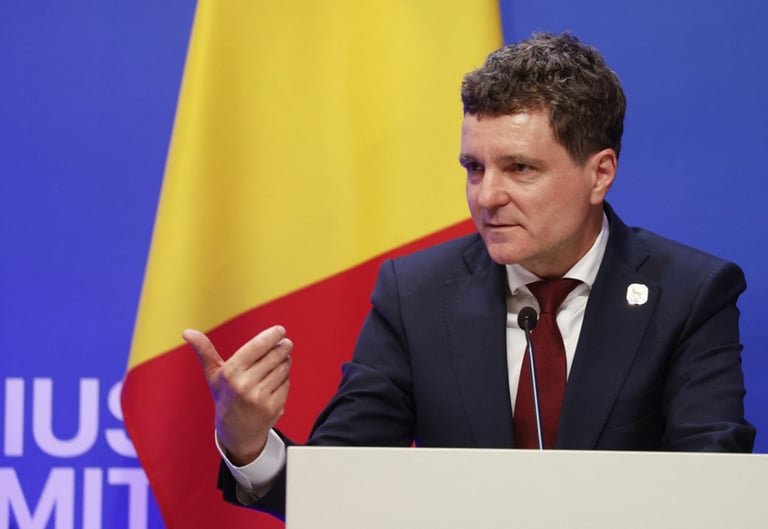

This coalition emerged after the previous government collapsed due to Marcel Ciolacu's resignation, which followed a controversial presidential election that was annulled by the courts, highlighting ongoing political instability in Romania.
The coalition comprises Bolojan's center-right National Liberal Party (PNL), the leftist Social Democratic Party (PSD), the reformist Save Romania Union party, and the ethnic Hungarian UDMR party, ensuring a comfortable majority.
On June 23, 2025, Romania's parliament approved a pro-European coalition government led by Ilie Bolojan, securing 301 votes in favor, significantly surpassing the 233 needed for approval, with only 9 votes against.
Despite existing policy differences, Bolojan has garnered support from these pro-European parties, indicating a strong commitment to fundamental reforms and financial reconstruction.
Bolojan has prioritized reducing Romania's significant budget deficit, which stood at 9.3% at the end of 2024, the highest in the EU, and reforming state institutions, acknowledging the potential unpopularity of necessary fiscal measures.
The new government faces the challenge of implementing potentially unpopular fiscal measures before the 2028 general elections, amidst a rising trend toward populism.
Nicusor Dan, who won re-election in May 2025, appointed Bolojan as prime minister after negotiations that notably excluded far-right parties.
President Nicusor Dan emphasized the need to rebuild citizens’ trust in the authorities, marking the formation of the new government as the beginning of a new chapter for Romania.
Sorin Grindeanu, the PSD leader, expressed commitment to being a responsible partner in the coalition, while hard-right opposition leader George Simion has raised doubts about its longevity.
Under a power-sharing agreement, the prime ministerial position will rotate to a PSD leader in 2027, following Bolojan's term.
The rise of Eurosceptic parties in Romania, which secured a third of parliamentary seats in December 2024, has raised concerns within the European Union, particularly regarding their opposition to military aid for Ukraine.
The approval of the new government comes after a period of political turmoil, which began with the annulment of presidential elections in December 2024 due to allegations of Russian interference.
Summary based on 4 sources
Get a daily email with more World News stories
Sources

Yahoo News • Jun 23, 2025
Romanian lawmakers vote in favor of pro-EU coalition, aiming to end protracted political crisis
Kyiv Post • Jun 23, 2025
Romania MPs Back Pro-EU Govt After Months of Turmoil
BGNES • Jun 23, 2025
Romania's parliament approves Ilie Bolojan's pro-European government