António Costa Makes History as First Portuguese President of the European Council, Advocates for Unified EU Stance
July 2, 2025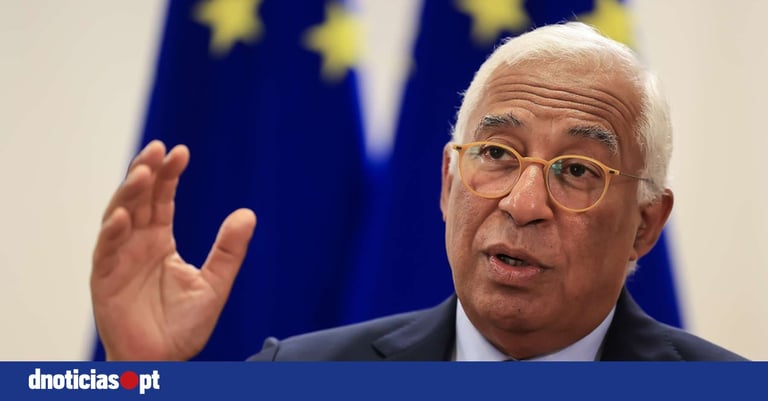

António Costa began his term as President of the European Council on December 1, 2024, making history as the first Portuguese and socialist to hold this position.
In his first six months in office, Costa aims to facilitate political debate among the 27 heads of state and government in the European Council, advocating for a unified position on various issues.
He emphasized the importance of focusing political discussions among the EU member states to reach a common stance on significant matters.
To enhance these discussions, Costa has implemented a reform to shorten Council meetings to one day, allowing for deeper and more meaningful political exchanges.
Despite challenges such as the pandemic and inflation, Costa asserts that the EU continues to play a stabilizing role in a multipolar world.
Costa also criticized the practice of holding elections in less than the standard four-year cycle, labeling it an 'abuse' of political cycles in certain countries, including Portugal.
Reflecting on political dynamics, he noted a trend towards the right in Europe and a decline in social democracy, with Portugal as a recent example.
He emphasized the importance of democratic alternation, where voters shift between left and right ideologies across different electoral cycles.
Costa highlighted the EU's commitment to multilateralism and its role in fostering a rules-based international system, as evidenced by recent and upcoming international summits.
He described the EU as a 'multifunctional building', suggesting that each country contributes based on its strengths, indicating a need for future discussions on reforms and enlargement.
Despite geographical and cultural differences, Costa noted that the EU has maintained a strong desire for unity and consensus, achieving agreement in 99.9% of cases.
He pointed out that the recent political landscape in Portugal reflects broader European trends rather than being a unique national phenomenon.
Summary based on 3 sources