Prague Airport's New Biometric EU Entry System Causes Lengthy Delays on Launch Day
October 12, 2025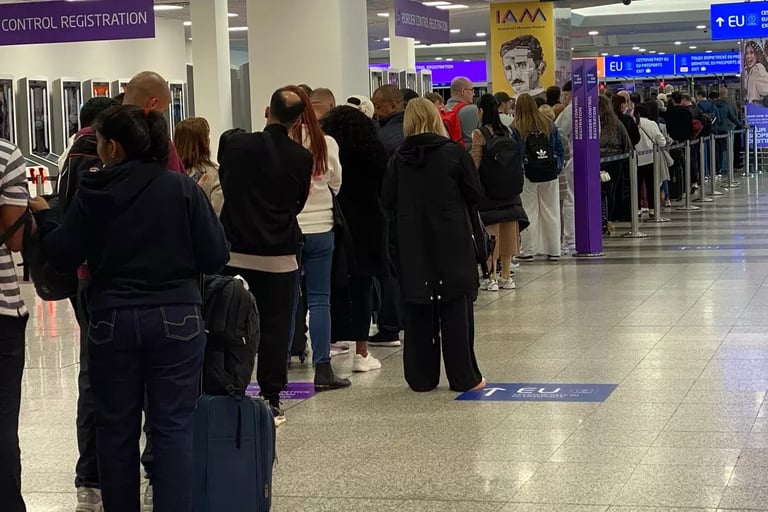

The new EU Entry-Exit System (EES), which uses biometric data collection, was launched at Prague Airport, leading to significant delays and long queues of up to 90 minutes for travelers on its first day.
At Prague Airport, biometric registration machines were initially non-operational, forcing staff to record biometric data manually at passport desks, which contributed to congestion and delays, especially for travelers arriving from the UK, Turkey, Egypt, and the UAE.
The system aims to improve border security and streamline travel within the EU by maintaining digital records of entries and exits, replacing manual passport stamping with biometric data collection such as facial recognition and fingerprints.
The EES is part of broader efforts within the Schengen area to enhance border management and security through digital biometric systems, covering over 1,800 border crossings with more than 500 million entries and exits annually.
EU citizens and nationals of Iceland, Liechtenstein, Norway, and Switzerland are advised to use dedicated lanes to avoid delays, as they are not subject to the EES biometric registration process.
The Schengen area's digital border scheme, involving biometric recording of fingerprints and facial recognition, is being gradually rolled out across Europe, with countries like the Czech Republic, Estonia, and Luxembourg starting from the outset.
Third-country nationals, including UK travelers, are now required to provide biometric data before reaching passport control, which has led to manual recording processes due to machine issues, causing further delays.
The biometric data, stored on a central EU database, is part of the effort to replace manual passport stamping and facilitate border checks for travelers staying in the Schengen Area for up to 90 days within a 180-day period.
Travel industry leaders, including Ryanair's CEO and travel associations, warn of ongoing delays and advise travelers to allocate extra time—up to three or four hours—for border processing during this transition period.
Ryanair's CEO, Michael O’Leary, expressed skepticism about the system's effectiveness, predicting a bumpy transition, while authorities have ordered staff to start recording biometrics at border posts, which has contributed to congestion.
Travelers should prepare for potential holdups and be aware of biometric requirements when flying in or out of Czechia, especially given the initial technical issues and manual recording procedures.
Passengers at Prague Airport have reported queues of up to 90 minutes, with some being directed to use the EU channel to ease congestion, though delays persist due to non-operational kiosks and manual biometric checks.
Summary based on 5 sources
Get a daily email with more World News stories
Sources

The Independent • Oct 12, 2025
Prague airport: hour-long queues as EU entry-exit system takes effect
Evening Standard • Oct 12, 2025
'Hour-long queues' at airport as EU's entry-exit system comes into force causing misery for travellers
Prague, Czech Republic • Oct 9, 2025
Long queues and biometrics: How flying in and out of Czechia changes this month
inkl • Oct 12, 2025
Hour-long queues in Prague airport as EU entry-exit system comes into effect