Netherlands Faces Snap Election Amid Wilders' Anti-Immigration Push and Rising Political Polarization
October 27, 2025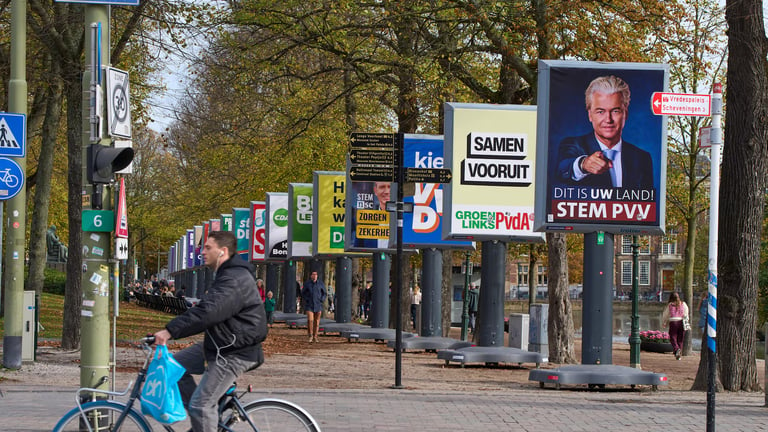

The Netherlands is holding a snap election following the collapse of its government, triggered by anti-immigration politician Geert Wilders, who withdrew his party over disagreements on immigration policies.
Wilders' ultimatum to implement a strict ten-point plan to curb immigration was rejected by coalition partners, leading him to pull his party out and prompting the early elections.
Frans Timmermans, leader of the center-left bloc, emphasizes the need to address governance stagnation and proposes building 100,000 new homes annually to tackle the housing crisis.
The upcoming elections feature 27 parties competing for 150 seats, with major issues including housing shortages, immigration, healthcare costs, and rising political polarization.
While the election results remain uncertain due to over 40% of voters still undecided, forming a new coalition is expected to be a lengthy process, similar to the last government which lasted 223 days.
Mainstream parties like the Christian Democrats, led by Henri Bontenbal, are campaigning on restoring stability and decency, explicitly ruling out alliances with Wilders' party, which is leading in polls.
Despite Wilders' lead in polls, his chances of becoming prime minister are slim, as major parties oppose working with him, making coalition formation difficult and potentially leading to minority governments.
Voters are expressing a desire for stability and unity amid ongoing political division, polarization, and recent violent anti-immigrant protests fueled by Wilders' rhetoric.
Wilders' campaign is centered on a strict anti-immigration platform, including halting asylum-seekers at borders, reflecting a broader rightward shift in Dutch politics.
Key issues in the election include immigration, housing shortages, healthcare costs, with less emphasis on climate change and defense, influenced by a global rise in far-right movements.
The Dutch political landscape is increasingly polarized, with anti-immigrant protests turning violent, prompting a call from King Willem-Alexander for a return to political compromise.
The outgoing government, led by civil servant Dick Schoof, was short-lived and marked by infighting, with Wilders blaming other coalition parties for not supporting his anti-immigration agenda.
Summary based on 3 sources
Get a daily email with more World News stories
Sources
The Independent • Oct 27, 2025
The Dutch go to the polls again in a snap election caused by anti-immigration lawmaker Wilders