EU Unveils Ambitious Plan for High-Speed Cross-Border Rail Network by 2040
November 5, 2025

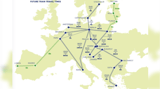
The European Commission unveiled a multi-year Action Plan through 2040 to expand high-speed cross-border rail across the EU, aiming to cut intercity travel times and connect major hubs with trains capable of 200 km/h or faster.
Key routes could see Berlin to Copenhagen cut to about four hours, Munich to Rome around six hours, and Berlin to Vienna via Prague down to roughly four and a half hours.
Brussels also adopted a Sustainable Transport Investment Plan to deploy 20 million tonnes of renewable and low-carbon fuels for aviation and maritime by 2035 at a €100 billion cost.
The article is part of ongoing, reader-supported coverage rather than a standalone report.
Reactions are mixed but cautiously supportive, with calls for concrete execution, funding, and streamlined permitting beyond broad plans.
Implementation details, including timelines, funding sources, and specific cross-border corridors, were not provided in the excerpt but are central to the plan.
To realize the plan, the Commission seeks greater market competition by easing entry for new operators, improving access to stations, depots, and ticketing, promoting a used rolling stock market, and creating a unified cross-border passenger rights framework.
The plan does not trigger projects or funding by itself; it serves as a framework to align member states and rail companies and to push for faster approvals and better coordination for cross-border routes.
Implementation will include stakeholder roundtables under TEN-T Coordinators, a progress scoreboard, and an updated mandate for the EU Agency for Railways to streamline authorisations and reduce national rule frictions.
The EU intends to remove cross-border bottlenecks, develop a new funding strategy, and improve conditions for the rail industry, leveraging private investments, loans, and guarantees from institutions like the EIB and national funds, potentially backed by EU money to mobilize more resources.
Financing will rely on a mix of private investment, loans, guarantees, and EU funding to mobilize additional resources for industry and operators.
Brussels calls for removing cross-border bottlenecks, coordinated private-public financing, easier authorizations, and improved conditions to advance the plan.
Summary based on 18 sources
Get a daily email with more EU News stories
Sources

The Guardian • Nov 5, 2025
High-speed rail network possible by 2040, says European Commission

Sofia News Agency • Nov 5, 2025
EU Unveils Plan for Sofia-Athens High-Speed Rail Link by 2040 - Novinite.com - Sofia News Agency