Switzerland Faces EU Treaty Showdown: Referendum Threatens Future of Bilateral Relations
March 2, 2026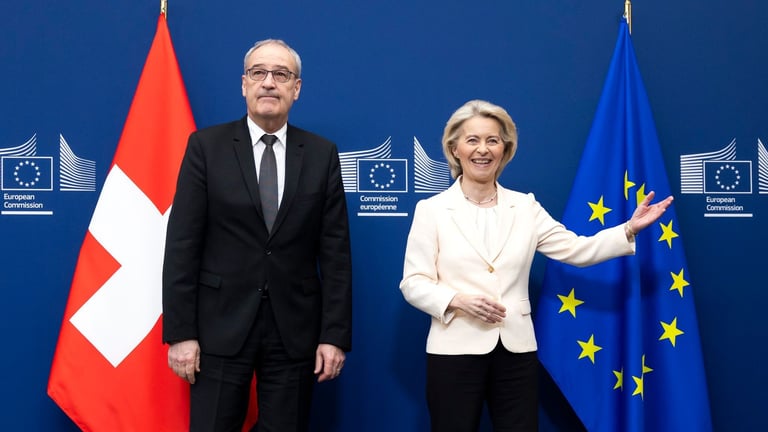

She described the agreements as an important day for both sides, emphasizing partnership by conviction despite close geographic proximity.
Switzerland argues the package increases leverage to adopt EU rules while allowing, under certain conditions, limits on immigration, aiming to satisfy both sides’ interests.
The government reiterates that the new accord provides more leeway for adopting EU legislation and permits immigration limits under specific conditions, alongside updated agricultural dispute provisions.
Business leaders are not unanimous; some warn about Brussels bureaucratic burdens, while proponents say only around 95 new acts are needed, mainly to harmonize technical standards and reduce cross-border complexity.
The framework includes a veto-enabled approach allowing Switzerland to block specific EU-law changes, with potential reciprocal EU access limits if vetoes occur, and an arbitration mechanism ensuring proportional responses.
Switzerland faces domestic hurdles as opponents label the package an EU-subordination treaty and push for a referendum, arguing that a rejection could suspend updates to bilateral agreements and create legal and planning uncertainties for Swiss exporters.
The EU has given its approval to the package, while Swiss politics remain divided, with the right-wing SVP-led opposition arguing the deal surrenders sovereignty and calling for a Volksabstimmung.
If a referendum blocks the deal, existing bilateral agreements would remain but stop receiving updates, weakening Swiss-EU relations and raising questions for exporters navigating the EU market.
The accords introduce clearer incorporation of EU-law in Switzerland, including a parity-chaired arbitration court for disputes and reliance on the European Court of Justice for opinions when EU internal-market rules apply, ensuring Switzerland is not advantaged relative to EU members.
EU Commission President von der Leyen framed the package as a strong neighborly partnership benefiting both sides, with Swiss President Parmelin calling it balanced and advantageous for citizens, business, and society.
Von der Leyen underscored the geostrategic importance of the deal and expressed optimism that ratification will proceed, viewing EU approvals as procedural once the Parliament and Council weigh in.
The reforms update dispute-settlement provisions in agricultural trade to align with newer EU free-trade agreements.
Summary based on 7 sources
Get a daily email with more EU News stories
Sources

FashionNetwork.com • Mar 2, 2026
EU and Switzerland sign agreement to deepen cooperation
blue News • Mar 2, 2026
Switzerland and EU conclude agreement for closer cooperation