Poland's Economic Surge: From Manufacturing to Innovation in Finance, IT, and Engineering
March 16, 2026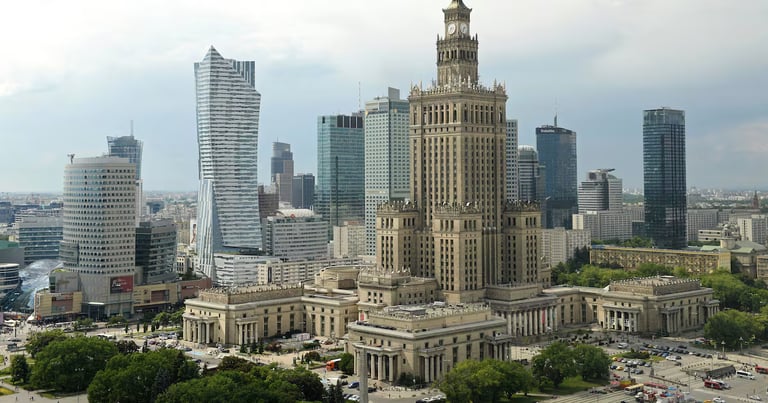


Poland has transitioned from post-communist hardship to a robust European economy, with GDP per capita around $55,340 in 2025 and an average growth of about 3.8% since joining the EU in 2004, outpacing the continental average.
Strong institutions, including independent courts, anti-monopoly oversight, and prudent banking regulation, combined with deep EU integration and funding, underpin Poland’s growth.
A broad political consensus in favor of EU membership and pro-market reforms has supported ongoing investment and reform.
There is a developing 'third wave' of domestic innovation that moves beyond manufacturing toward high-value sectors like finance, IT, and engineering, with renewed emphasis on investing in universities.
Demographic pressures loom, with aging populations and a low birth rate raising potential labor shortages and pension costs, underscoring the need for continued innovation and value-added growth.
The report notes that information comes with inputs from various agencies.
Examples of people like engineer Joanna Kowalska in Poznan illustrate the human dimension: returnees and EU-funded projects, including Poland’s first AI factory and a continental quantum computing initiative.
Public sentiment among Poles and officials is optimistic about staying and contributing to growth, with calls to broaden innovation, reduce regional inequalities, and support young families and immigration as growth assets.
Future priorities include boosting domestic innovation, investing in universities, and leveraging immigrant workers to sustain a growing economy.
Key drivers include strong institutions, entrepreneurship, and successful ventures like Solaris, the electric bus maker that leveraged EU access and innovative pivots.
Policymakers emphasize innovation, higher education investment, and reducing urban-rural disparities to sustain growth and competitiveness.
Cultural and educational shifts toward knowledge-based industries, with a focus on expanding higher education, are viewed as long-term assets for Poland’s global competitiveness.
Summary based on 13 sources
Get a daily email with more World News stories
Sources
Yahoo Finance • Mar 16, 2026
How Poland went from post-Communist wreck to one of the world's 20 biggest economies
Los Angeles Times • Mar 16, 2026
Poland is now among the world's 20 largest economies. How did it happen? - Los Angeles Times
NBC News • Mar 16, 2026
Poland is now among the world's 20 largest economies. How did it happen?
AP News • Mar 16, 2026
Poland is a model for economic growth | AP News