Italy's €22.7 Billion Rebuild: A Decade After 2016 Quake, Amatrice Remains Fractured
August 20, 2026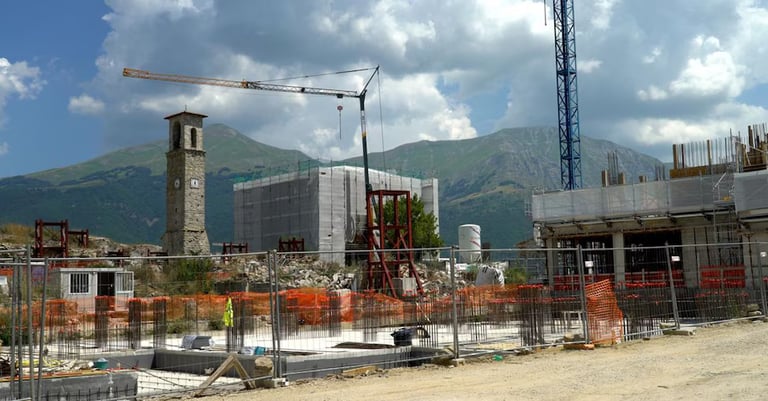

Today marks the 10-year anniversary of the 2016 Central Italy earthquake, with Amatrice and surrounding towns commemorating victims as public tributes unfold, even as reconstruction remains a slow, uneven process.
Italy has approved about €22.7 billion for reconstruction in the disaster zone, with roughly €10 billion already paid out; in Amatrice, only about 38% of damaged properties are restored and central areas stay largely behind barriers.
The August 24, 2016 quake devastated Accumoli, Amatrice and Arquata del Tronto, killing 299 people and leaving extensive damage across the central Apennines.
Overall, recovery is portrayed as a nuanced, long-term process: reconstruction drives growth, employment and social rebuilding, but pockets of depopulation and economic strain persist in certain districts.
Visitors and supporters are urged to engage in respectful, sustainable tourism and to verify open services and events, while contributing to local initiatives and using official channels for reconstruction donations.
Local leaders cite ongoing challenges, including housing shortages, rising rents from staff housing, and the need to dismantle temporary villages as rebuilt homes come online; a new hospital is nearing completion and could open in 2027 if properly equipped.
Residents express mixed feelings on commemorations, with some officials’ ceremonies seen as performative, while others emphasize progress and a town determined to rebuild, noting housing issues persist.
Social impact includes loss of communal spaces and services, with young people hesitant to return due to isolation, slow infrastructure recovery and reduced work and social opportunities.
Rebuilding has been slowed by bureaucracy, inheritance disputes, and mafia scrutiny, with the pandemic and renovation schemes like the Superbonus contributing to delays in planning and funding.
Cultural and social factors—ownership disputes, fragmented land inheritance and the loss of medieval town fabric—complicate reconstruction efforts.
The pandemic, high construction costs and diverted labor have caused a two-year halt in rebuilding and affected funding and planning.
Personal stories show emotional toll and attachment to Amatrice, as families stay to rebuild while others fear the town’s original character is lost, even as some adapt to a new economy in rebuilt spaces.
Summary based on 11 sources
Get a daily email with more EU News stories
Sources
Yahoo News UK • Aug 20, 2026
A decade after earthquake, Italy's Amatrice struggles to rebuild
The Mighty 790 KFGO | KFGO • Aug 20, 2026
A decade after earthquake, Italy’s Amatrice struggles to rebuild
Il Sole 24 ORE • Aug 20, 2026
Earthquake in Central Italia: 10 years on, the (slow) reconstruction is boosting GDP
irishnews.com • Aug 20, 2026
A decade after earthquake, Italy’s Amatrice struggles to rebuild