Europe Unveils Bold Strategy: AI, Renewables, and Climate Resilience Amid Global Challenges
September 17, 2026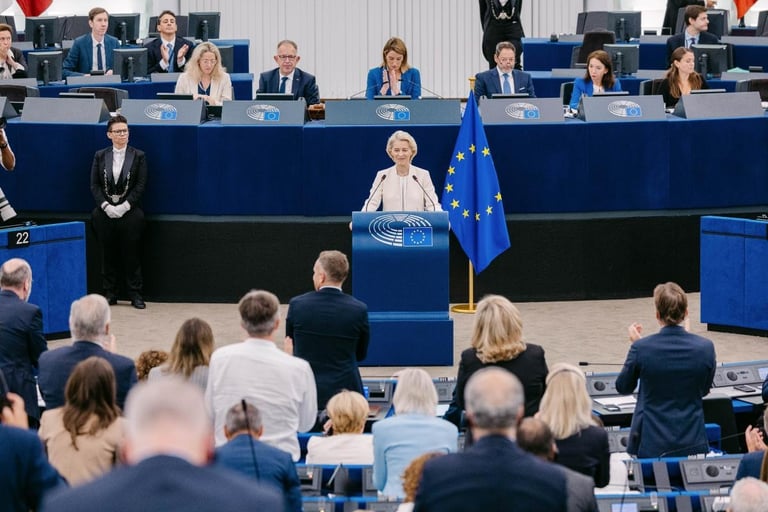

Artificial intelligence is being upgraded to key strategic infrastructure in Europe, with the AI Act at the core of safeguards and a push to expand computing capacity through new funding models, even as this raises questions about energy, water, and land use and how to balance security with environmental protections.
Measures proposed to boost resilience include a Climate Insurance Alliance to close the disaster protection gap, a European Heatwave Plan focused on early warning and urban cooling, a European Water Initiative to improve efficiency and security, and the creation of a European fire-fighting corps supported by a coordinated summer 2026 response with nearly 800 pre-positioned firefighters and aircraft.
To curb reliance on external suppliers for critical raw materials, Europe plans to establish a European Critical Raw Materials Corporation to secure stockpiling and supply across sectors from EVs to chips and defense, addressing heavy dependence on China.
In a Strasbourg address, the leader framed Europe’s challenges as a mix of opportunities and threats amid rapid global change and rising hostility, stressing urgency in adapting to a shifting international landscape.
The energy strategy emphasizes electrification and domestic production to double the share of electricity in Europe’s energy mix by 2040, aiming to cut fossil fuel import costs by up to 260 billion euros annually, with over 80 GW of new renewables installed by 2025 and many projects awaiting grid connection, underscoring the need to accelerate the European Networks Package and grid-scale storage.
Europe is shifting away from Russian fossil fuels, boosting military spending, and pursuing closer ties with Canada, including making Canada an associate member to deepen cooperation in energy, critical materials, AI, quantum tech, cybersecurity, and economic security.
The speech outlines a strategy to reduce external dependencies, boost competitiveness, and improve climate resilience through electrification, strategic materials, AI, and adaptation measures, while environmental groups critique the approach for potentially weakening protections.
Climate resilience features prominently, including a hot summer linked to tens of thousands of heat-related deaths and a plan to identify the 100 most vulnerable areas and assess risks and mitigation strategies under a forthcoming framework.
Environmental groups argue that climate resilience must go hand in hand with ecological protections, warning that focusing narrowly on energy security and competitiveness could erode safeguards; they call for integrating environmental protections with growth and resilience policies.
Summary based on 1 source