Estonian FM Warns of Putin's Hybrid Warfare Tactics in Europe on Amanpour
September 23, 2026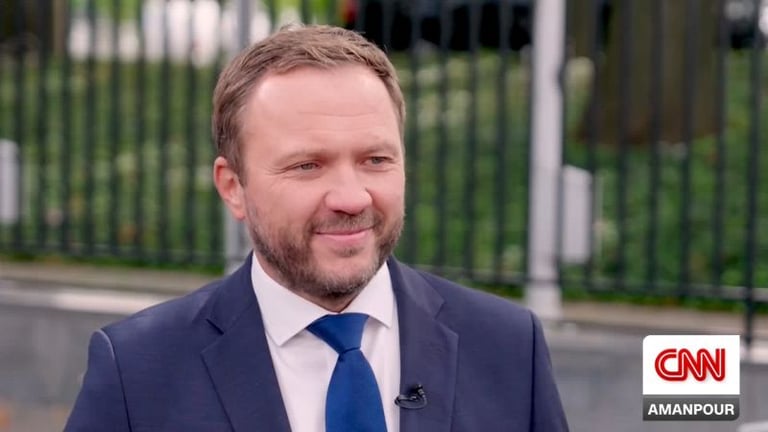

European leaders have sharpened rhetoric about Russia, expanding warnings from Eastern Europe to Western capitals and even neutral Switzerland, signaling a renewed security concern across the continent.
Authorities warn of a cluster of low-scale incidents—drone and intelligence activity attributed to Russia and the possibility of operations launched from commercial ships—that could test NATO's Article 5 commitments.
Russia’s September 2023 Duma elections are framed by the Kremlin as a mandate and mobilization tool, with accusations of vote fabrication and exclusion of opposition.
Analyst Tsahkna argues Putin is exploiting Western fear and uncertainty to advance strategic aims.
Western intelligence and officials warn of Russia mobilizing hundreds of thousands, while Kyiv and Western partners emphasize continued war scenarios rather than an immediate invasion.
Estonia’s Foreign Minister Margus Tsahkna discusses Putin’s hybrid warfare and Europe’s anxiety about a widening conflict on CNN’s Amanpour program.
A dual narrative is at play: warnings are used to justify mobilization and to shape public perception in Europe and Russia, complicating threat assessment.
Governments including France, Poland, Britain, Germany, and Denmark publicly acknowledge heightened risk of hybrid attacks and warning preparations.
Tsahkna outlines potential responses from European states and international bodies to Russia’s tactics.
Belarusian military activity near the Suwałki Gap and US deployments toward a base in Poland contribute to a tense security environment.
Experts stress vigilance and coordinated Western responses to hybrid threats from Russia.
The interview frames European security anxiety, NATO posture, and the impact of hybrid warfare on regional stability.
Summary based on 2 sources