China's Rare Earth Export Controls Disrupt Japanese Industry, Spur Urgent Search for Alternative Supplies
July 7, 2026

China’s export controls on rare earths are disrupting Japanese industry and pushing calls for alternative supply sources to reduce risk in AI, EV, electronics, and defense supply chains.
Tensions over Taiwan have prompted China to restrict mineral shipments to Japan, escalating frictions and supply concerns.
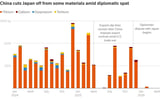
Customs data show prolonged export gaps for terbium oxide and dysprosium oxide to Japan from November through May, with yttrium oxide supply also restricted since December.
Japan’s government and industry are pursuing recycling and stockpile coordination, but timelines and yields remain unclear, sustaining uncertainty for businesses.
Corporate filings reflect a widening impact from reduced rare earth and related material supplies, signaling broader economic strain.
Dysprosium, yttrium, and terbium oxides are among the key minerals affected, essential for high-tech and manufacturing applications.
The government is speeding up measures to secure stable mineral supplies, including international cooperation and rare-earth recycling initiatives.
Japan seeks alternatives through government action and international collaboration, including a US framework for critical minerals, potential deep-sea deposit development, and G7 stockpiling coordination.
Regulatory filings from Japanese companies raise warnings about potential disruptions to strategic mineral supplies, signaling broader economic risk.
Despite supply concerns, broader Japanese economy shows resilience with the Nikkei reaching record highs and improved business sentiment in the Bank of Japan’s Tankan survey.
Together, corporate and government actions are intensifying to address the rare-earth squeeze, highlighting urgency around supply security, industrial resilience, and economic stability.
Analysts note industry-specific impacts vary due to inventories and resilience, with China controlling about 70% of production and 60% of reserves as of 2025.
Summary based on 5 sources
Get a daily email with more Financial Markets stories
Sources
The China-Global South Project • Jul 7, 2026
Corporate Japan’s Rare-Earth Warnings Get Louder as China Keeps the Spigot Closed
Investing.com • Jul 6, 2026
Corporate Japan’s rare-earth warnings get louder as China keeps the spigot closed
The Japan Times • Jul 7, 2026
Corporate Japan’s warnings over rare earths get louder as China keeps the spigot closed
Devdiscourse • Jul 7, 2026
Japan's Economy Faces Rare Earth Crisis Amid China Trade Tensions