US-Listed ETFs Shatter Inflow Records, Eye $2 Trillion Milestone Amid Market Volatility
October 2, 2026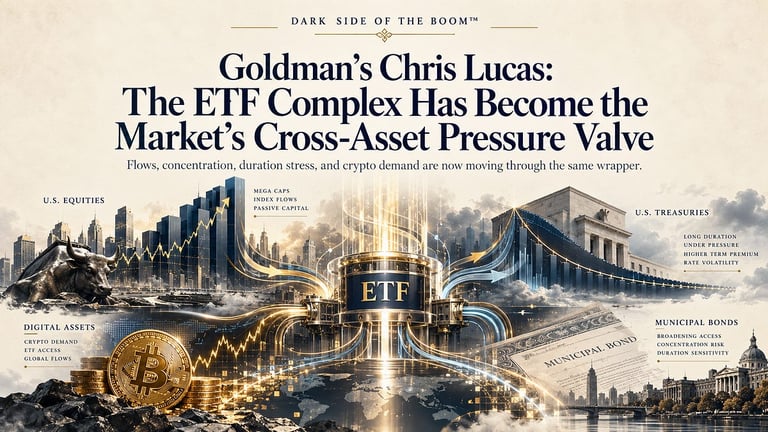

US-listed ETFs drew a record $151 billion in September 2026, pushing year-to-date inflows to $1.54 trillion and setting a new annual high beyond 2025.
Active ETF strategies reached about $574 billion year-to-date, roughly 40% of all US-listed ETF flows while comprising only 13% of total ETF assets, signaling a structural shift toward active management via ETFs.
Non-US equity ETFs attracted $30 billion in September, representing 36% of all equity inflows despite 17% of equity assets, with developed and emerging markets driving demand.
For advisors and RIAs, the shift calls for reevaluating fee models, portfolio construction, and leveraging active ETFs, derivative-income strategies, and defined-outcome products to manage risk and seek alpha.
Investors should confirm how automatic investments and dividend reinvestment are handled in ETFs, due to potential fractional-share issues, and verify with their broker and plan provider.
Tax considerations differ: mutual funds can realize gains on redemptions, while ETFs typically avoid capital gains through in-kind redemptions, offering a potential tax edge depending on account type.
The appeal of passive investing centers on cost, tax efficiency, liquidity, and the compounding effect of fees, making it a default choice for many savers and institutions.
ETFs offer international diversification, currency considerations, and access to a broad spectrum of strategies from broad markets to sector, dividend, growth, or bond-focused funds.
Major index benchmarks—S&P 500, Nasdaq-100, and total market indices—drive different risk/return profiles shaped by market cap and sector concentration.
Latin America’s ETF adoption faces regulatory fragmentation; success hinges on strong local distribution, market-maker relationships, and understanding institutional buyer behavior, with growing demand for Mexico, Chile, and Brazil retail access to global ETF exposure.
ETFs are positioned as cost-efficient, tax-efficient, and transparent vehicles for tactical asset allocation, fixed income, and income strategies in a volatile macro environment.
Markets worry about price discovery with rising ETF ownership and market power concentrated among a few providers, potentially inviting regulatory scrutiny.
Summary based on 10 sources
Get a daily email with more Financial Markets stories
Sources

Investing.com • Oct 2, 2026
US-listed ETFs on course for record annual inflows, State Street says
The Dark Side Of The Boom • Oct 3, 2026
Goldman’s Chris Lucas: The ETF Complex Has Become the Market’s Cross-Asset Pressure Valve