AI Stock Rout Sends Investors Toward India as $3 Trillion Wiped From S&P 500
November 10, 2026


A sharp selloff in AI-linked stocks has investors reassessing the trade, after Democratic victories in the US midterm elections raised concerns that tighter rules could slow data-center construction and the infrastructure spending that has helped drive markets higher; the decline erased about $3 trillion in S&P 500 market value.
Asia was especially exposed because many of its largest companies supply the global AI buildout, and shares of SK Hynix, Samsung Electronics, Foxconn and TSMC fell sharply between November 2 and November 6.
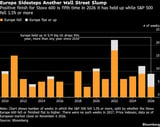
Citigroup downgraded US equities to neutral from overweight, seeking more stable sentiment and cleaner positioning, while upgrading European equities excluding the UK because of their lower technology exposure and greater sensitivity to falling oil prices.
Against that backdrop, global investors are looking beyond semiconductor and AI-linked shares toward emerging markets, domestic-growth businesses and markets with lower valuations, higher dividend yields or less exposure to the AI trade.
India has become a prominent beneficiary of the shift: the Nifty 50 rose 8.6% in its strongest week since 2021, while foreign investors bought a net $1.9 billion of Indian equities through Wednesday.
India’s economic indicators remained relatively resilient despite elevated energy prices and related inflation and fiscal pressures, while merchandise exports grew about 23% in Q3 2026 amid a recovery in global trade and an improved tariff position relative to peers.
SBI Funds says India could attract more capital if doubts about the sustainability of global AI investment drive investors toward other markets, though the outcome will also depend on global trends and domestic conditions.
India could also gain from technology companies diversifying data-center investment amid possible development restrictions in Texas and Georgia; its capacity is projected to grow nearly fivefold to 7.5 GW by 2030, requiring about $36 billion in investment.
The scale of the AI buildout remains enormous: Goldman Sachs forecasts about $1.3 trillion in AI infrastructure investment in 2027, up 60% year over year, and $2 trillion in 2028, including spending by AI labs, sovereign AI enterprises, corporate customers and major technology companies.
But the spending outlook is not assured: Bank of America warned that if cloud spending holds at its current fourth-quarter pace, 2027 capital expenditure would be about $1.2 trillion and capacity 30 gigawatts, both below consensus forecasts of $1.55 trillion and 40 gigawatts.
Views on semiconductor shares are divided: Goldman Sachs sees attractive risk-reward in selected stocks after the downturn, while warning that large-cap AI computing, memory and equipment shares remain vulnerable if infrastructure funding or execution disappoints.
Wells Fargo warned that a possible earnings-per-share downturn as capital spending peaks and additional supply arrives in 2028 is not yet reflected in stock prices; current valuations imply roughly 8% year-over-year earnings growth.
Summary based on 19 sources
Get a daily email with more Tech stories
Sources
Yahoo! Finance • Nov 9, 2026
Citi Strategists Cut US Stocks, Upgrade Europe After AI Turmoil
Economic Times • Nov 9, 2026
Citi downgrades US stocks to 'neutral' as AI sell-off, regulatory risks mount
AOL • Nov 10, 2026
Wells Fargo upgrades US AI infrastructure view after chip selloff
Business Standard • Nov 8, 2026
AI selloff rejuvenates Asia's forgotten investment trades