Asian Stocks Slide as AI Spending Doubts, Tariff Fears and Rate Concerns Rattle Investors
November 25, 2026


Asian markets sold off sharply on Wednesday as investors questioned whether huge AI investments will deliver adequate returns, while renewed U.S. tariff concerns and higher-rate expectations added pressure to technology and semiconductor shares; South Korea’s Kospi fell as much as 5.3%, Japan’s Nikkei 225 dropped nearly 3%, and the MSCI Asia-Pacific index excluding Japan lost 2.3%.
The central worry is whether heavy technology spending can generate enough growth to justify elevated valuations, with investors divided over whether the downturn is a temporary pullback after rapid gains or the start of closer scrutiny of AI-related earnings.
That uncertainty extends to whether data-center spending will produce profits, the strain it may put on hyperscalers’ free cash flow, possible regulation and a potential memory-chip supply glut after 2028.
Analysts in a cited TipRanks comparison remained positive on Nvidia, Micron and AMD, each rated Strong Buy, but Mizuho cut its AI capital-expenditure forecasts for 2027 and 2028 to $1.4 trillion and $1.8 trillion, respectively, citing possible project delays or cancellations.
Yardeni Research analysts said financial, political and physical constraints could slow the AI investment boom, but not stop it, given continued expected demand for computing capacity.
Rate concerns also loomed, with October personal consumption expenditures inflation data expected to show headline and core annual rates more than one percentage point above the Federal Reserve’s 2% target, potentially reinforcing expectations of a quarter-point increase early the following month.
Hawkish remarks added to those concerns: John Williams said on November 24 that inflation remained far too high, while Christopher Waller had raised the possibility of a 0.5-percentage-point increase on November 18.
Potential U.S. trade restrictions created another source of uncertainty for export-oriented businesses, but an investigation is not a finalized tariff schedule and the eventual scope, timing, exemptions and allocation of costs remain unknown.
The public comment period on the proposed U.S. tariffs runs into January, with hearings scheduled later that month.
The regional pullback followed a pause after the previous day’s surge and weakness in U.S. technology shares, with volatility likely to persist until foreign-investor flows and confidence in the global semiconductor outlook improve.
In South Korea, foreign investors had net sold about 414.7 billion won on the main board by 9:20 a.m.; individual investors bought about 441.5 billion won, while institutions net sold about 52.2 billion won.
The VKOSPI, which tracks expected volatility in the KOSPI 200 options market, rose for a second straight session to around 60 intraday, signaling that investors were bracing for further sharp swings.
Summary based on 88 sources
Get a daily email with more World News stories
Sources

Yahoo! Finance • Nov 25, 2026
Wall St set for lower open as AI losses deepen; inflation, tariffs weigh

AP News • Nov 25, 2026
Selling of AI shares drags most Asian stocks lower | AP News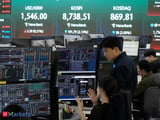
Economic Times • Nov 25, 2026
Global Market Today: Asian stocks fall as AI trade doubts resurface