Samsung's QD-OLED Penta Tandem Revolutionizes Brightness and Longevity in Premium Displays
February 12, 2026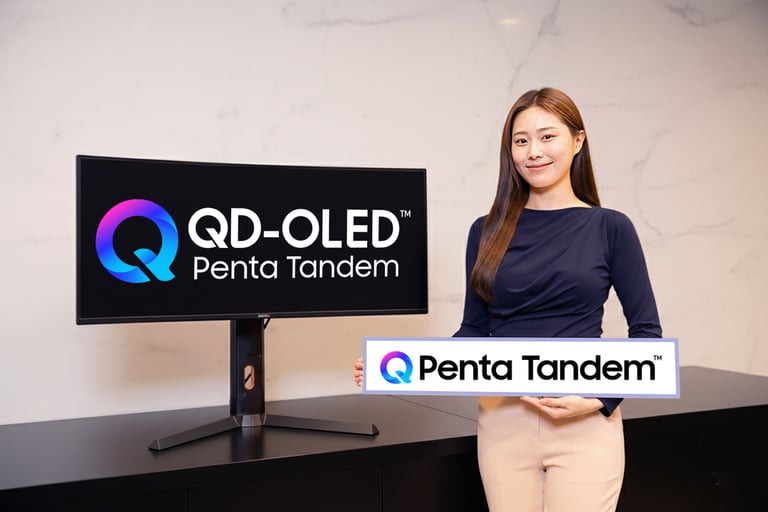


Differences between LG’s and Samsung’s tandem architectures are explained, including subpixel and light-source management and how newer implementations have evolved in terms of white subpixels and subpixel structure.
Samsung Display has introduced a QD-OLED Penta Tandem, a five-layer blue-emitting stack intended to boost brightness and longevity for premium monitors and TVs, signaling a material upgrade over the previous four-layer design.
The article frames Penta Tandem as both a genuine engineering advancement and a marketing umbrella designed to simplify consumer understanding and competitive labeling.
If real-world performance aligns with claims, Penta Tandem could become a meaningful, market-facing benchmark for high-end displays.
A real-world example, MSI MPG 272URX, has been described as a five-layer tandem OLED with EL 3.0, illustrating the concept without branding and suggesting the term may be more marketing than required for technology.
There is a readability improvement noted for monitors, with a shift toward a conventional V-stripe subpixel arrangement to enhance text clarity and reduce color fringing.
Consumers should treat Penta Tandem as a panel-generation marker rather than a model name, looking beyond the 3% OPR to HDR performance, especially for larger bright scenes.
Branding for Penta Tandem suggests a 1.3x increase in luminous efficiency and roughly double the lifespan, with peak brightness up to 4,500 nits for TVs and 1,300 nits for monitors measured at 3% external peak brightness, offering HDR headroom.
Real-world applicability may vary by panel size and type, meaning the 1.3x brightness boost could depend on configurations such as 27-inch 1440p versus 34-inch ultrawide versus 4K 27-inch.
The coverage notes branding considerations and situates the development among rival efforts (LG tandem OLED, Asus Swift Tandem OLED) while referencing ongoing OLED burn-in discussions among consumers.
If not in a rush, waiting for next refresh in preferred sizes could yield better HDR performance and longer panel health.
The piece closes with a light touch on the jargon surrounding OLED tech and notes about reader engagement and author bio.
Summary based on 7 sources
Get a daily email with more Tech stories
Sources

Gizmodo • Feb 12, 2026
Somehow, Samsung May Make QD-OLED Monitors Even Better
Digital Trends • Feb 12, 2026
Samsung’s QD-OLED Penta Tandem upgrade means brighter screens and longer life

TechSpot • Feb 12, 2026
Samsung announces QD-OLED Penta-Tandem branding for its latest five-layer panel tech