Germany's 'Green-Gold Rule': A New Blueprint for Climate Investment and State Debt Reform
August 3, 2025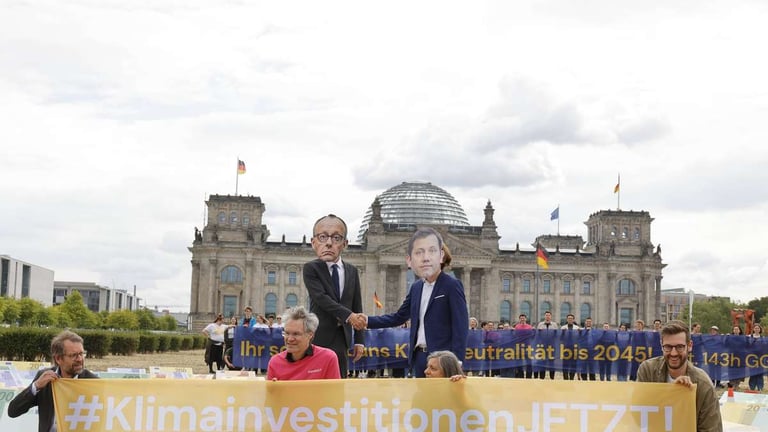

The Potsdam Institute for Climate Impact Research (PIK) has introduced a 'green-gold rule' aimed at aligning Germany's climate objectives with prudent public finances, proposing that investments in CO2 reduction can justify additional state debt.
In light of this initiative, a commission formed by the Union is working to revise the existing debt brake, which currently restricts federal structural deficits to 0.35% of GDP, to enable future investments while maintaining fiscal discipline.
The current debt brake, established after the 2008 financial crisis, has led to underinvestment in critical infrastructure and climate initiatives due to its strict limitations on state borrowing.
This new 'green-gold rule' is positioned as a potential guiding framework for the government commission tasked with modernizing the debt brake, emphasizing the need for a structured approach to financing climate initiatives.
Critics argue that traditional fiscal policies have favored short-term expenditures over long-term investments, which are essential for effective climate action and sustainable economic growth.
The proposed framework aims to shift the focus from the costs of investments to their long-term benefits, facilitating a more effective and financially sustainable climate policy.
Under this new framework, Germany could allow up to 161 billion euros in new state debt for climate protection investments by 2030, contingent on strict adherence to emission targets.
High CO2 prices under this proposal are expected to generate additional revenue that could help alleviate the impact of rising fuel prices on consumers while also providing more flexibility for government borrowing.
This initiative seeks to create a clearer path for financing climate protection without undermining the integrity of the debt brake, ensuring that future debts are directly linked to measurable environmental benefits.
Since the government transition in Spring 2025, Chancellor Friedrich Merz has shifted from a strict adherence to the debt brake to advocating for increased state investment, even if it necessitates taking on more debt.
PIK co-president Professor Ottmar Edenhofer has emphasized that this approach not only aligns sustainable policy with sound public finances but also mitigates the risk of misusing funds intended for climate goals.
The research also calls for a revised EU-level deficit control framework to support ambitious climate goals and accommodate the anticipated new emissions trading system set to begin in 2027.
Summary based on 2 sources