German Port Workers Strike Over Wage Talks, Disrupting Major Import/Export Hubs
August 17, 2026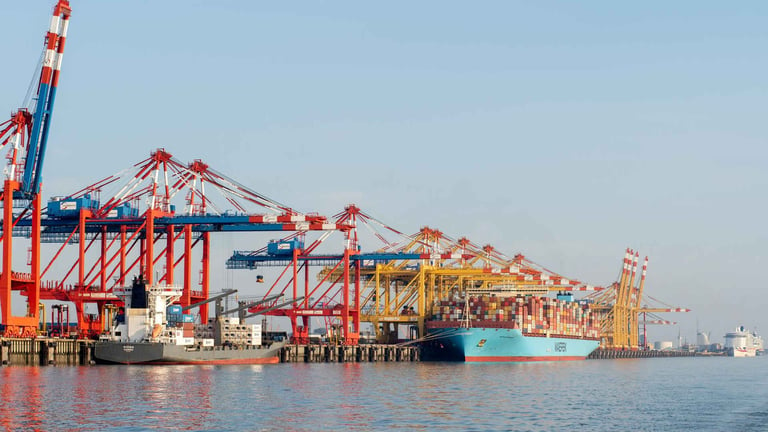

About 11,000 port workers are involved in ongoing wage talks, with Verdi demanding an 8.2% hourly wage increase over one year, while employers (ZDS) have offered a 5.1% rise over 19 months.
The current warning strikes followed Verdi’s rejection of the employer offer, which was based on a survey of more than 6,100 employees who largely deemed it insufficient.
Verdi’s chief negotiator stated the strikes are a serious signal and that the union is awaiting a date for a third round of talks.
EUROGATE Bremerhaven issued advisories that no handling operations would take place during the 24-hour strike, warning customers that truck and rail slots could not be booked.
With the peace obligation expired, more warning strikes at other German ports remain possible, raising concerns for shippers about disruptions to North Sea port operations.
In Hamburg, three of four container terminals, including Burchardkai, face unloading limitations and delays, with disruption extending to other terminals.
Note: The article also contains unrelated content about politics, media collaboration, and a regional travel section.
ZDS warned the strikes are disproportionate and could threaten import/export flows amid strained global supply chains.
ZDS stressed that the strikes undermine the reliability of German seaports and supply chains.
Demonstrations are planned in Hamburg, starting at Burchardkai and moving through the harbor toward a rally; no third negotiation date has been set.
Verdi has called 24-hour warning strikes at six German seaports, including Hamburg, Bremerhaven, Bremen, Wilhelmshaven, Emden, and Brake.
Industry players report significant restrictions in cargo handling at affected terminals, highlighting the impact on major import/export hubs.
Summary based on 15 sources
Get a daily email with more World News stories
Sources
Splash247 • Aug 18, 2026
Six German ports hit by 24-hour strike
Deutsche Presse-Agentur • Aug 17, 2026
Pay dispute triggers 24-hour strike at six German seaports