Helsing Launches Clarity, a European AI Rival to Palantir’s Military Targeting Platform
November 11, 2026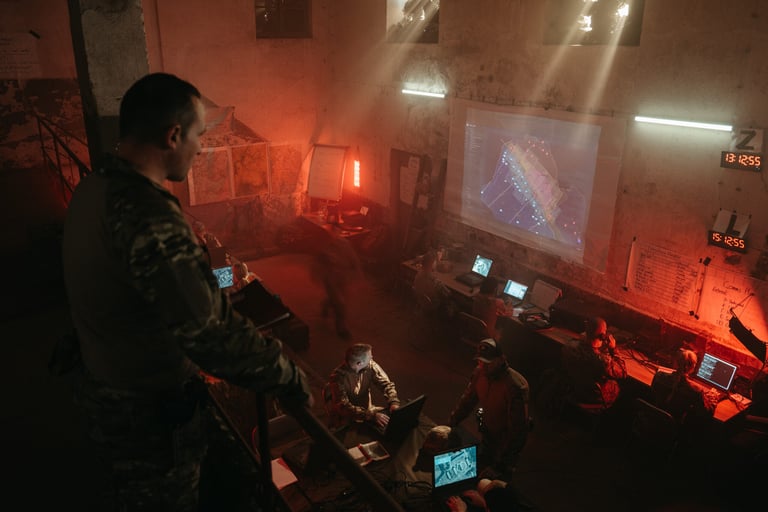


German defence company Helsing has launched Clarity, an AI platform that combines military sensor data and other sources to identify assets and prepare targeting information, putting it forward as a European alternative to Palantir’s Maven.
Designed to connect battlefield observations with tactical decisions and military systems, Clarity aims to help personnel manage the growing volume of data spread across defence tools.
The platform uses military-focused AI agents trained on real and simulated data, with a shared military ontology and evidence base allowing hundreds of agents to work in parallel on complex intelligence tasks.
Helsing’s demonstrations included classifying Russian buildings in satellite imagery, modeling underground spaces, estimating protective soil depth, tracking ships in Russia’s so-called shadow fleet and analyzing military operation plans.
Helsing says the system only nominates targets when independent sources agree and confidence is high, while operators must review the evidence, confirm targets, select assets and authorize every hand-off to a weapon; decisions are recorded with the responsible person.
But without public deployments or test results, outsiders cannot verify the agents’ reliability, the confidence threshold for nominating targets or how much time operators have to review them.
That gap matters because critics warn human approval can become merely formal when AI generates targets faster than people can assess them; Helsing has not disclosed Clarity’s review times.
Helsing says Clarity runs on local European infrastructure under national control, with customer-owned systems keeping data, models and operations in the customer’s hands.
The launch lands amid European governments’ push for technological sovereignty and growing interest in local alternatives to Palantir, whose Maven system is used by NATO and other military customers.
In Germany, Palantir’s use by security agencies is politically contentious, with concerns about reliance on U.S. technology prompting calls for a European alternative; some German states use its software, while Germany’s domestic intelligence service chose a European competitor.
Germany could be an early customer: its military has said it will not buy Maven for now and plans to begin deploying its own AI system in 2027, with full implementation expected in 2028.
Clarity will still have to meet the Defence Ministry’s standards for robustness, reliability, transparency and traceability, while open architectures could help reduce dependence on a single supplier.
Summary based on 12 sources
Get a daily email with more Tech stories
Sources

TNW | Defence • Nov 11, 2026
Helsing launches Clarity, a European rival to Palantir’s Maven
Tech Times • Nov 12, 2026
Helsing Unveils AI Military Targeting Platform Clarity With Human Sign-Off, No Customers Named
PitchBook • Nov 12, 2026
Who are Europe’s startup alternatives to Palantir? - PitchBook
The Kyiv Independent • Nov 11, 2026
Helsing launches European alternative to Palantir’s military AI