Australia Faces Fuel Crisis: Imports Surge as Domestic Refining Plummets, Prices Skyrocket
March 26, 2026


Australia faces a fuel crisis driven by a long-term decline in domestic oil production and refinery capacity, increasing dependence on imports and shrinking refining capacity.
The government maintains a reserve stockpile, but by mid‑January it equated to about 38 days of petrol, 30 days of diesel, and 30 days of jet fuel—well below the IEA’s 90‑day guideline for net importers.
Roughly 80–90% of domestic fuel demand (around 850,000 barrels per day) is import-dependent, while domestic refining barely meets 20% of demand and strategic stocks sit around 30 days.
Two potential suppliers could ease the squeeze: South Korea, which may still supply if price is competitive, and India, redirecting volumes away from Europe as flows shift after sanctions on Russian crude.
Possible responses include IEA-endorsed demand measures such as work-from-home, reduced speed limits, exploring four-day weeks for some public servants, and considering fuel rationing if disruption persists.
Petrol and diesel prices spiked in early March, with diesel near $3 per litre and unleaded around $2.50, while regional shortages caused some stations to run dry.
Over the past decade, five refineries closed, and the government has extended subsidies to keep the remaining plants running through 2030.
In March 2026, six tankers carrying refined products were canceled or deferred, signaling looming shortages as true demand hits.
Regulatory steps temporarily eased fuel specifications to widen import options and help domestic refiners supply markets.
Australian consumer confidence and the economy deteriorated amid the energy shock, with sentiment low, mortgage rates rising, and inflation possibly around 5% by mid-year.
Emergency measures released about 4.8 million barrels from strategic reserves in March 2026, but stock levels remain well below the 90‑day guideline.
Diesel remains the most stressed fuel; major import sources include South Korea and Singapore for gasoline and diesel, with jet fuel largely sourced from China.
Summary based on 2 sources
Get a daily email with more Global Economy stories
Sources
The Guardian • Mar 24, 2026
Seven charts that reveal how unprepared Australia was for the fuel crisis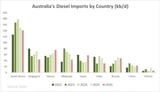
naked capitalism • Mar 26, 2026
Australia’s Fuels Dependence Turns Into a Crisis | naked capitalism