US and G20 Target Export Imbalances; Rising Bond Yields Signal Investor Fears
September 2, 2026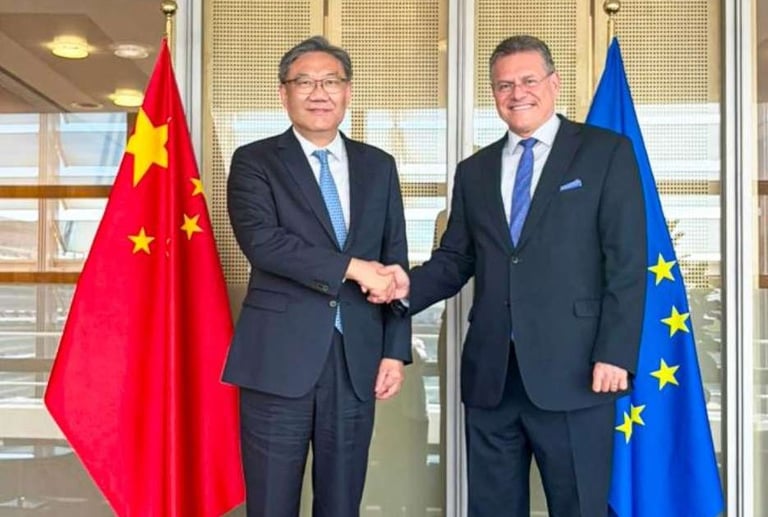


The US Treasury Secretary notes that 19 G20 members aim to address cheap export surpluses that create global imbalances, while China resists this stance.
Global bond market volatility is rising on debt and inflation worries, with Japan’s 10-year yield hitting 3% for the first time since 1996, signaling investor anxiety.
European and Canadian officials express discomfort or caution about Russia’s attendance and the push for normalization of ties.
China-aligned voices in the Global Times say genuine dialogue with the EU requires the right attitude, avoiding coercive ultimatums.
The piece urges mutual respect, equality, and rules-based competition, warning against malicious competition or a trade war, and advocates listening to China’s concerns.
It also emphasizes that the door to dialogue remains open, but the EU must approach it with the right posture and avoid coercive rhetoric.
EU leaders in June gave von der Leyen a mandate to rebalance through dialogue and the potential use or revision of defense tools, aiming to reduce risk without severing ties.
The plan includes the Anti-Coercion Instrument, enabling restraining measures in public procurement or IP rights, contingent on majority EU support.
Von der Leyen says the goal is to lower risks and rebalance relations through dialogue, with defense instruments as a fallback if talks fail.
Guo urges both sides to implement leaders’ consensus and resolve issues through equal, respectful, mutually beneficial consultation to maintain positive momentum in trade.
Both sides should sustain momentum in economic ties and address concerns via dialogue.
Activation of the Anti-Coercion Instrument requires a majority vote among EU member states, with some hesitation due to ongoing bilateral engagements with China.
Summary based on 66 sources
Get a daily email with more Macroeconomics stories
Sources

AP News • Sep 1, 2026
Bessent says G20 could take a page from US tariff playbook | AP News

Seeking Alpha • Aug 31, 2026
Bessent Is Right To Call For Rebalance As EU Trade Deficits With China Surge