Pediatric Cancer Survival Soars to 87%: Precision Medicine and Global Collaboration Drive Breakthroughs
December 5, 2025

Experts emphasize developing treatments that are not only curative but also less toxic, aiming to minimize long-term physical and mental health consequences for survivors.
Leaders stress continued investment in precision medicine and AI/genomics/imaging integration to reduce treatment toxicity and improve outcomes for all pediatric patients.
Progress in immune-based therapies and precision medicine includes approvals like menin inhibitors revumenib (Revuforj) for certain leukemias and ongoing trials for related mutations.
International collaborations are expanding data sharing and expertise to develop new therapies and broaden access to trials, reflecting a global push to improve outcomes for children with cancer.
The report calls for expanded data-sharing through federated databases, international trials like MATCH and AcSé-ESMART, and policy changes to broaden trial access, including tax credits, extended market exclusivity, better Medicare reimbursement, and decentralized trial models.
Technologies such as single-cell and multiomics profiling, CRISPR functional testing, and AI-driven data integration are accelerating discovery and refinement of treatments and tumor classification.
Survival varies by cancer type, with nearly 95% 5-year survival in low-grade gliomas and Burkitt lymphoma, but as low as 3.8% for diffuse midline gliomas and 29.1% for high-grade gliomas, highlighting persistent gaps for certain pediatric cancers.
The AACR Pediatric Cancer Progress Report 2025 shows substantial gains in US pediatric cancer survival, with overall 5-year survival rising from about 63% in the 1970s to 87% in 2015–2021 and mortality dropping by roughly 76% from 1970 to 2023, driven by risk-stratified therapy, precision medicine, and better supportive care.
Incidence has declined modestly in recent years (about 1% annually from 2015 to 2022), even as overall survival improves, underscoring uneven progress across cancer types.
Advances in precision medicine allow tailoring treatment intensity to molecular profiles, reducing therapy for favorable cases and intensifying it for higher-risk ones.
Kaley’s case illustrates the impact of trials and new therapies, with the drug dordaviprone (Modeyso) contributing to a life-saving trajectory from age 8 to 14 and supporting its FDA approval for diffuse midline glioma.
Efforts to address disparities include expanding access to precision diagnostics, increasing pediatric trials in rural areas, and launching organizational efforts (CureSearch, CobiCure, Cancer Research UK/LifeArc) to fund and run pediatric-focused trials.
Summary based on 4 sources
Get a daily email with more Science stories
Sources

Medical Xpress • Dec 4, 2025
Inaugural report describes trends in pediatric cancer in U.S.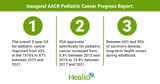
hemonc today logo • Dec 4, 2025
Inaugural AACR pediatric cancer report details improved survival, but ‘long way to go’
American Association for Cancer Research (AACR) • Dec 4, 2025
AACR’s Inaugural Pediatric Cancer Progress Report Highlights Decades of Advances, Powerful Survivor Stories, and Urgent Unmet Needs