New Study Reveals Bone-Brain Axis Linking Depression and Osteoporosis, Proposes Integrated Treatments
February 7, 2026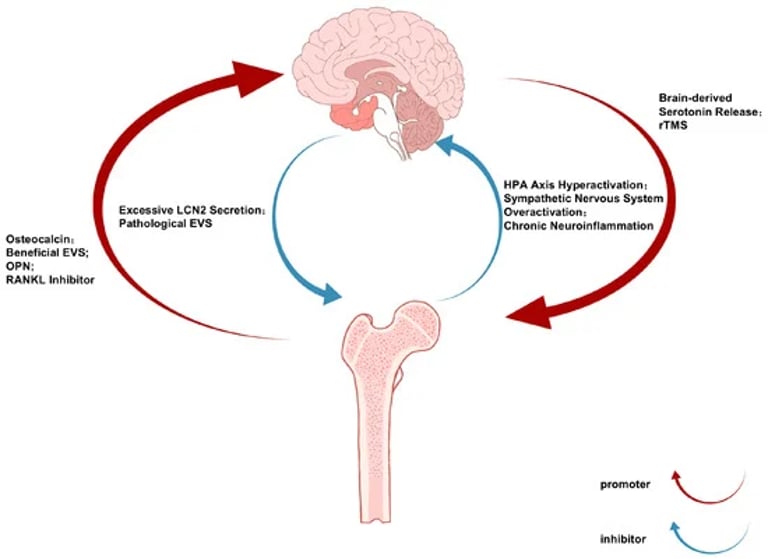

There is a bidirectional bone–brain axis linking depression and osteoporosis: depression associates with lower bone mineral density and higher fracture risk, while osteoporosis correlates with more depressive symptoms, suggesting shared pathways for integrated treatment.
A new review argues for this bone–brain axis, proposing a bidirectional relationship between depression and osteoporosis and highlighting the axis as a legitimate physiological network.
In clinical translation, potential interventions include neuromodulation and targeted exercise, therapies focusing on bone-derived signals (such as osteocalcin pathways), and chronobiological approaches like melatonin and light therapy.
Clinical applications discussed include customized exercise programs, neuromodulation, and treatments aimed at bone-derived signals to improve mood and bone health.
Bone-derived factors—osteocalcin, lipocalin-2, sclerostin, extracellular vesicles, and RANKL—can influence brain function by crossing the blood–brain barrier or signaling via neural pathways, affecting neurogenesis and neurotransmitter systems.
Extracellular vesicles mediate bone–brain and brain–bone signaling; their miRNAs and proteins can impact osteogenesis and cognitive function in animal models.
The axis is presented as a genuine physiological network with immediate implications for multidisciplinary care and personalized interventions.
Knowledge of the bone–brain axis should be integrated into patient management to improve outcomes for older adults and other vulnerable populations.
Circadian rhythm disruption is a key interface; clock genes are expressed in bone and brain, suggesting chronotherapy as a potential intervention route.
The 2025 Biomolecules review reframes bone as a signaling source that influences brain function and mood, not just a structural tissue.
RANKL signaling and lipocalin-2 influence neuroinflammation and mood, with anti-RANKL therapies showing potential to improve depressive symptoms and bone metabolism.
The bone–brain axis involves bone-derived signals like osteocalcin and osteopontin that can affect brain function and mood, while depression-related stress can promote bone loss through cortisol and inflammatory pathways.
Summary based on 2 sources
Get a daily email with more Science stories
Sources
ScienceAlert • Feb 6, 2026
'Brain-Bone-Axis' May Link Depression With Osteoporosis, Study Claims