Revolutionary Wearable Device Aims to Transform Stress Monitoring in Vulnerable Patients
May 15, 2026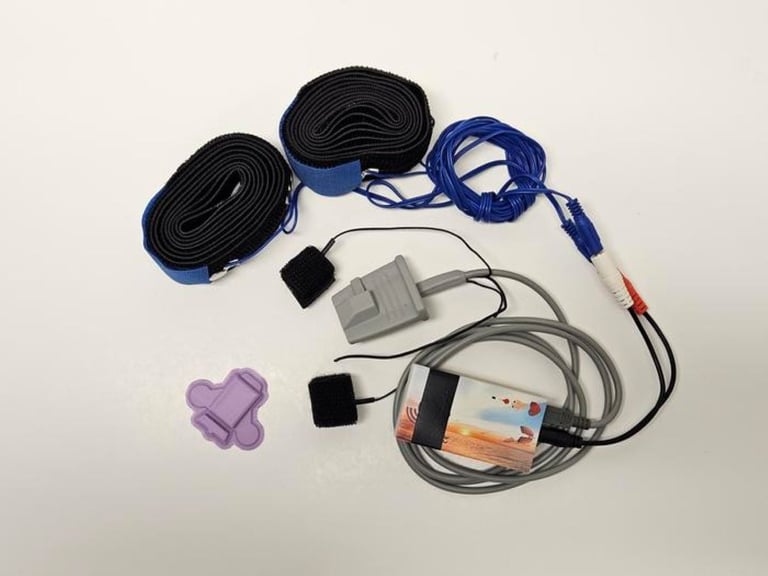

A soft, wearable device is being developed to objectively assess stress in vulnerable patients, such as infants and the elderly, reducing dependence on subjective caregiver observations and invasive biomarkers.
The device is designed to help clinicians monitor stress in patients who can’t communicate well, diagnose sleep disorders outside labs, track mental health, and flag early signs of medical complications.
The study appears in Science Advances and is supported by the Querrey Simpson Institute for Bioelectronics.
Originating from clinicians’ needs at Lurie Children’s Hospital of Chicago, the technology is being developed by Northwestern University researchers led by John A. Rogers.
Validation spans controlled lie-detector–style tests, cognitive load, cold-immersion scenarios, pediatric sleep studies, and medical training simulations, showing stress signatures align with established measures such as pupil dilation and hospital-grade tests.
Real-world validation shows the wearable’s accuracy in matching polygraph performance in controlled tests, correlating with pupil dilation during cognitive tasks, and detecting sleep-disorder events in pediatric sleep studies.
The Science Advances study highlights potential applications across stress medicine, sleep medicine, pediatric care, and medical education, with ongoing plans to broaden sensor capabilities and accelerate clinical adoption.
The system combines multiple sensors (microphone, motion, thermal, and electrical conductance) to build a holistic stress profile and transmits data to devices for real-time analysis using machine learning.
Northwestern researchers developed a soft, wearable polygraph-like device that continuously measures physiological signals—heart activity, breathing, sweating, skin temperature, and blood flow—to detect stress rather than deception.
In high-stress medical training, participants with higher physiological stress performed worse, illustrating how stress can impair decision-making and performance.
Future goals include expanding clinical testing, personalizing stress detection, integrating with hospital and home monitoring systems, and potentially adding EEG to distinguish stress from pain and deepen understanding of brain stress processing.
Plans also call for larger trials and broader adoption, with ongoing work to tailor stress detection to individuals and broaden sensor suites.
Summary based on 2 sources
Get a daily email with more Science stories
Sources
Northwestern Now • May 13, 2026
Wearable polygraph detects hidden stress
Neuroscience News • May 15, 2026
Wearable Polygraph Tracks Deep-Body Stress Signals