Oxford Study Reveals Microglia's Role in Clearing Parkinson’s Protein Buildup, Opening New Therapy Possibilities
October 7, 2026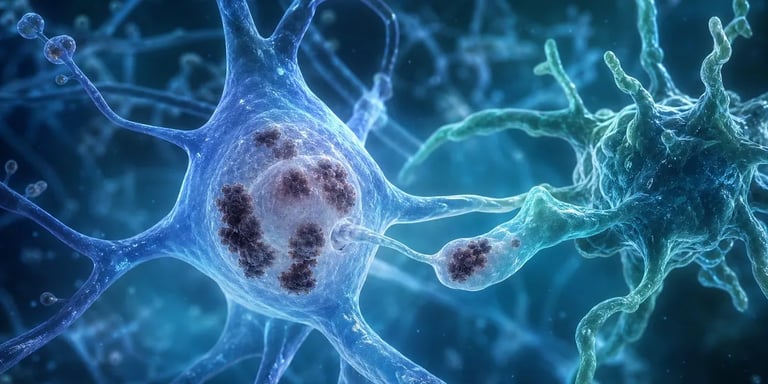

A University of Oxford study using human iPSC-derived neuron and microglia models shows a subset of microglia can selectively remove alpha-synuclein aggregates from dopamine neurons through trogocytosis, preserving neuronal viability.
The findings were published in Science Translational Medicine and summarized by News-Medical, highlighting a potentially neuroprotective microglial subtype in Parkinson’s disease.
These results imply that identifying and understanding this neuroprotective microglial function could guide the development of disease-modifying therapies that boost beneficial microglial responses without triggering harmful inflammation.
Genetic and pathological context links GPNMB to Parkinson’s risk, with post-mortem and incidental Lewy body disease brain tissue showing elevated GPNMB in substantia nigra microglia.
Elevated GPNMB expression is observed in microglia from the substantia nigra in tissue with alpha-synuclein pathology or Parkinson’s disease, tying this protein to disease-relevant microglial activity.
The clearance is driven by a distinct activated microglia subpopulation and is modulated by P2RY12 sensing, CD22 inhibitory signals, and an autocrine IL-10 brake to prevent excessive inflammation.
Single-cell RNA sequencing identifies the activated microglia subgroup involved in clearance, with signaling through P2RY12 and CD22 and regulation by IL-10 to protect healthy tissue.
Overall significance: demonstrates a nuanced, potentially protective immune response in Parkinson’s under specific microglial states and points to GPNMB-mediated trogocytosis and IL-10 regulation as therapeutic angles.
The study suggests pursuing therapies that target microglial GPNMB and related signaling pathways to enhance alpha-synuclein aggregate clearance in neurodegenerative conditions like Parkinson’s disease.
Editorial notes: open-access Science Translational Medicine article from Oct. 7, 2026, credits the University of Oxford, and discusses the DAM (disease-associated microglia) cluster and methodological specifics.
Funding for the research came from the Medical Research Council and the National Institute for Health and Care Research Oxford Biomedical Research Centre.
GPNMB, upregulated in microglia contacting aggregate-bearing neurons, binds alpha-synuclein and is essential for effective clearance, as CRISPRi reduction of GPNMB diminishes removal of aggregates.
Summary based on 2 sources