Revolutionary Stem Cell Treatment Enables Paralyzed Man to Stand and Walk
March 24, 2025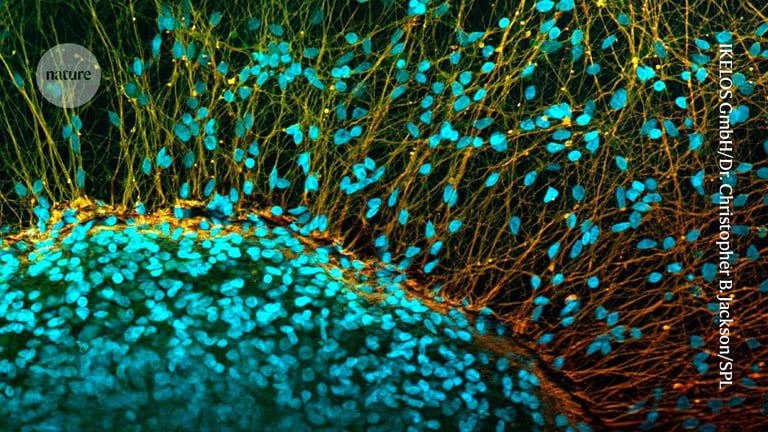

The clinical trial involved four adult men who had complete spinal cord injuries, all of whom had lost motor and sensory function below the injury site.
One participant improved to level D on the American Spinal Injury Association Impairment Scale, allowing him to stand independently and train to walk, while another reached level C, showing partial movement.
Researchers from Keio University in Tokyo have announced a groundbreaking treatment that has allowed a fully paralyzed man to stand and begin walking again after receiving an injection of reprogrammed neural stem cells.
The treatment employs induced pluripotent stem (iPS) cells, which are adult cells reprogrammed to behave like embryonic stem cells, allowing them to develop into various cell types.
Over a year of follow-up, significant improvements were observed in the participants, with no serious side effects reported, although two did not show substantial recovery.
Although the full results of the trial have not yet been published in a peer-reviewed journal, early improvements in two patients have generated cautious optimism among experts.
This pioneering trial, led by neuroscientist Hideyuki Okano, has been supported by the Japanese government since 2019 and builds on earlier successes in monkey trials.
Each participant received a dose of two million neural precursor cells, derived from reprogrammed adult tissue, injected directly into their injuries shortly after the spinal cord injuries occurred.
Preliminary analyses suggest that the treatment may be effective, but experts emphasize the need for larger trials to confirm these findings and rule out natural recovery.
Neuroscientist James St. John highlighted the importance of further research to determine the effectiveness of iPS cells across different types of spinal injuries.
The significant recovery of the patient underscores the potential of stem cell research in regenerative medicine, yet experts caution that more extensive trials are necessary for definitive results.
With approximately 900,000 people sustaining spinal cord injuries globally in 2019, and around 20 million living with varying degrees of impairment, this research could have profound implications for treatment.
Summary based on 3 sources
Get a daily email with more Science stories
Sources
Nature • Mar 24, 2025
Paralysed man stands again after receiving ‘reprogrammed’ stem cells
Daily Mail • Mar 24, 2025
Breakthrough as paralyzed man walks again after single injection of new treatment
BGR • Mar 25, 2025
‘Reprogrammed’ stem cells helped a paralyzed man stand again