Breakthrough: Bacterium Identified as Culprit in Sea Star Wasting Disease, Threatening Marine Ecosystems
August 4, 2025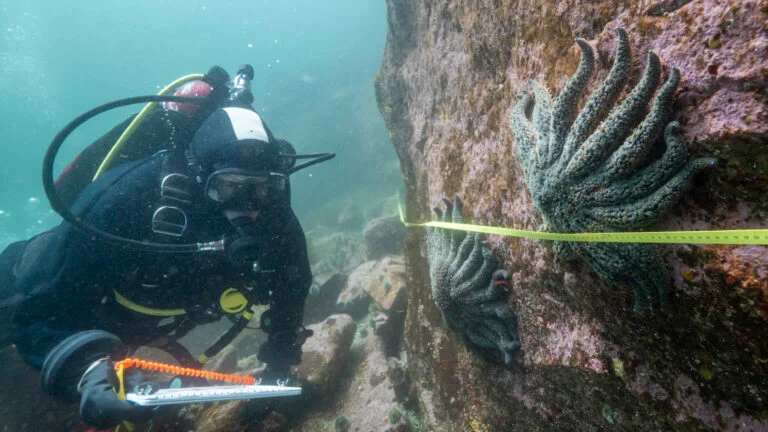

Researchers have made a significant breakthrough in understanding sea star wasting disease (SSWD) by identifying the causative agent as a strain of the bacterium Vibrio pectenicida, which has devastated sea star populations across more than 20 species from Alaska to Mexico.
Since the onset of the epidemic in 2013, the sunflower sea star has experienced a staggering 90% population decline in just five years, leading to severe ecological repercussions.
The disease manifests through lesions and the loss of arms in sea stars, contributing to their critical endangerment and the collapse of kelp forests, which are vital marine ecosystems.
The research, published in the journal Nature Ecology & Evolution, involved collaboration among scientists from the University of British Columbia, the Hakai Institute, and the University of Washington.
Lead author Dr. Melanie Prentice expressed optimism that this discovery will enhance management and mitigation strategies for SSWD, including the development of diagnostic testing to identify disease-free areas for potential sea star reintroduction.
The findings also highlight the potential role of climate change in exacerbating marine disease outbreaks, as increased water temperatures may contribute to the virulence of Vibrio pectenicida.
Despite identifying the bacterium as the cause, uncertainties remain regarding the transmission methods of the disease and the potential for sea stars to recover, which may depend on environmental factors.
The collapse of sunflower sea star populations has led to an explosion in sea urchin numbers, further threatening kelp forests that provide habitat for various marine species.
In response to the crisis, captive breeding programs initiated by institutions like the California Academy of Sciences aim to reintroduce sunflower sea stars, offering cautious optimism for ecosystem restoration.
Local initiatives, such as the Sonoma-Mendocino Kelp Recovery Plan, are mobilizing scientists and stakeholders to implement restoration efforts, including removing excess sea urchins to aid kelp recovery.
The symptoms of SSWD, including contorted arms and tissue melting, underscore the urgent need for proactive conservation measures to protect these keystone species and maintain coastal ecosystems.
Overall, the research underscores the rapidity of ecological changes and the importance of sunflower sea stars in marine environments, highlighting the need for continued investigation and conservation efforts.
Summary based on 19 sources
Get a daily email with more Science stories
Sources

Yahoo News • Aug 4, 2025
Scientists say they have solved the mystery of what killed more than 5 billion sea stars

Los Angeles Times • Aug 4, 2025
Researchers figure out what's caused devastating sea star epidemic - Los Angeles Times