New Study Unveils Lactylation-Phosphorylation Loop Driving Cancer Progression, Reveals Potential Therapeutic Targets
January 14, 2026

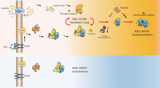
A lactylation–phosphorylation regulatory loop involving GCN5, ERK, and lactate amplifies lactate-driven cancer progression, revealing a critical metabolic–signaling axis in tumors.
Targeting lactylation or the GCN5–ERK loop could complement existing therapies, with findings warranting broader validation across oncologic contexts.
RNA-seq data are deposited in the Genome Sequence Archive under BioProject PRJCA048893, with additional data available in the paper, Supplementary Information, and accompanying source data.
A novel therapeutic angle emerges: a cell-penetrating peptide that inhibits ERK lactylation, which impairs tumor growth in preclinical KRAS-mutant cancer models.
Key themes include the Warburg effect, lactate’s role in tumor immunology, histone lactylation, ERK/MAPK signaling dynamics, and potential MEK/ERK–targeted therapies.
Lactylation at ERK lysine 231 weakens MEK activation, promotes ERK dimerization, and enhances downstream phosphorylation that supports cancer cell survival, proliferation, and migration.
The study surveys lactate’s impact on immune cells, MAPK signaling, and oncogenic regulation, highlighting a comprehensive examination of lactylation- and phosphorylation-mediated cancer mechanisms.
The references anchor the work in foundational cancer metabolism, lactate biology, histone lactylation, and ERK signaling, situating the research within established metabolic–signaling contexts.
Extracellular lactate is presented as an active signaling metabolite, reshaping how tumor metabolism interfaces with signaling pathways.
Summary based on 2 sources