Subway Mosquitoes Evolve Rapidly, Highlighting Human-Driven Evolution and Speciation
January 16, 2026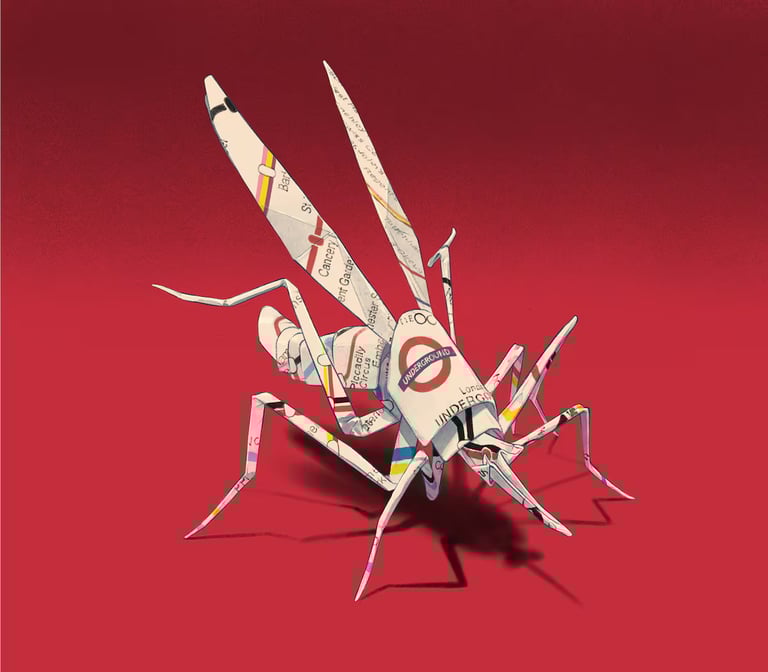

Hybridization attempts between subterranean and surface mosquitoes revealed strong reproductive barriers, pointing to speciation into distinct groups.
Culex pipiens in the London Underground has become a blood-feeding subspecies, shedding seasonality and thriving in enclosed, constant-temperature settings.
A subway-adapted population of mosquitoes in a New Yorker-like setting has evolved rapidly, diverging from their surface-dwelling relatives.
Scientists suggest naming the subspecies after the station where the first specimen was found, underscoring the subway system as a sprawling natural laboratory.
The discussion extends to climate change, noting how warming environments are driving rapid shifts in timing and form in butterflies and flowers.
The piece concludes with a reminder to consider the darker side of rapid evolution and invites deeper exploration of these dynamics.
The article situates this subway case within a broader pattern of human-driven evolution, including domestication, niche creation from environmental change, and unintended consequences like antibiotic resistance and pesticide-driven selection.
Divergence among subway mosquitoes occurred across multiple lines due to microenvironment differences, suggesting several subspecies and potential future independent species.
Other contexts illustrate similar evolution: dog domestication with health trade-offs, cockroaches moving to colder indoor environments, and urban-adapted rats and seagulls.
Summary based on 1 source
Get a daily email with more Science stories
Source
Ediciones EL PAÍS S.L. • Jan 15, 2026
‘Culex molestus’: What the London Underground mosquito species says about us