Metoposaurus: The Triassic Crocodile-Like Predator That Ruled Shallow Lakes
January 16, 2026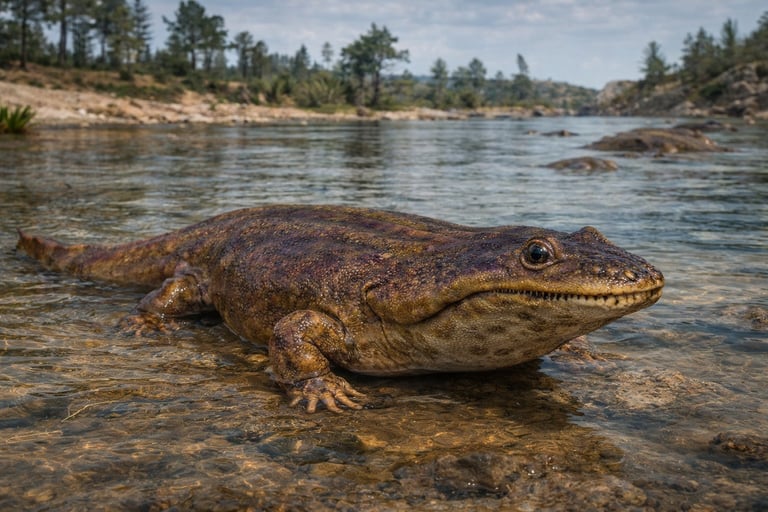

The Portuguese specimen from the Algarve region dates to the Late Triassic, about two meters in length, featuring an extremely flattened skull and sharp teeth.
Although not a direct crocodilian relative, Metoposaurus algarvensis shows ecological convergence with crocodilians in ambush predation, shallow-water habitat, and a fish-based diet.
The study of Triassic amphibians like Metoposaurus highlights vertebrate diversification and experimentation, showing large amphibians could occupy top predator roles given favorable geology and ecology.
Triassic Eurasia and Gondwana hosted diverse aquatic life and environments—from stagnant to slow-flowing waters—that supported large ambush predators like Metoposaurus with high fish productivity.
Fossil material includes complete skulls, articulated vertebrae, parts of the limbs, and tooth wear that differentiate this species from other metoposaurs.
Anatomically, the species possessed a wide skull over 60 cm, upward-facing eyes for partial submersion, a robust short limb design, and dentition optimized for piscivory.
Fossils reveal Metoposaurus algarvensis was a crocodile‑like ambush predator in shallow freshwater lakes, using a conical‑toothed jaw and a body built for underwater propulsion to catch fish.
As an ecosystem engineer, Metoposaurus algarvensis likely influenced fish populations and broader trophic dynamics, producing cascading effects in aquatic communities.
Summary based on 1 source