Breakthrough Study: Albumin Emerges as Key Defender Against Deadly Fungal Infection Mucormycosis
January 17, 2026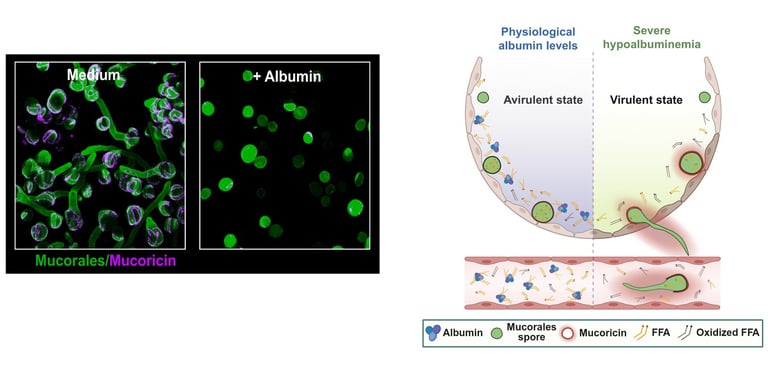

A multidisciplinary study led by researchers from IMBB-FORTH and the University of Crete, with collaborators across Europe, the U.S., and India, reveals a protective role for albumin against the fungal infection mucormycosis, with findings published in Nature.
The research shows that Mucorales fungi exhibit increased fatty acid oxidation in patient sera, while albumin-bound free fatty acids suppress fungal protein synthesis, contributing to reduced virulence in animal models.
Clinically, patients with mucormycosis have significantly lower albumin levels, and hypoalbuminemia emerges as the strongest predictor of poor outcomes across multiple continents.
Experimentally, albumin inhibits the growth of Mucorales, and removing albumin from healthy blood enables fungal growth; albumin administration restores resistance in mice.
Overall, the results point to a novel host-defense role for albumin and suggest potential therapeutic uses of albumin to prevent or treat mucormycosis, a disease with limited current treatment options.
Mucormycosis is a rapidly progressing, high-mortality infection caused by Mucorales fungi, commonly linked to weakened immunity, malnutrition, or diabetes, and it can cause tissue damage and blackening of skin.
Publication details: Antonis Pikoulas et al., Albumin orchestrates a natural host defence mechanism against mucormycosis, Nature, 2026, DOI: 10.1038/s41586-025-09882-3.
The antifungal mechanism hinges on fatty acids bound to albumin; these FFAs resist oxidation, enter the fungus, and block expression of genes essential for growth, thereby restraining virulence.
Summary based on 1 source