Space Reproduction: Global Effort to Tackle Reproductive Health Challenges for Interplanetary Missions
February 4, 2026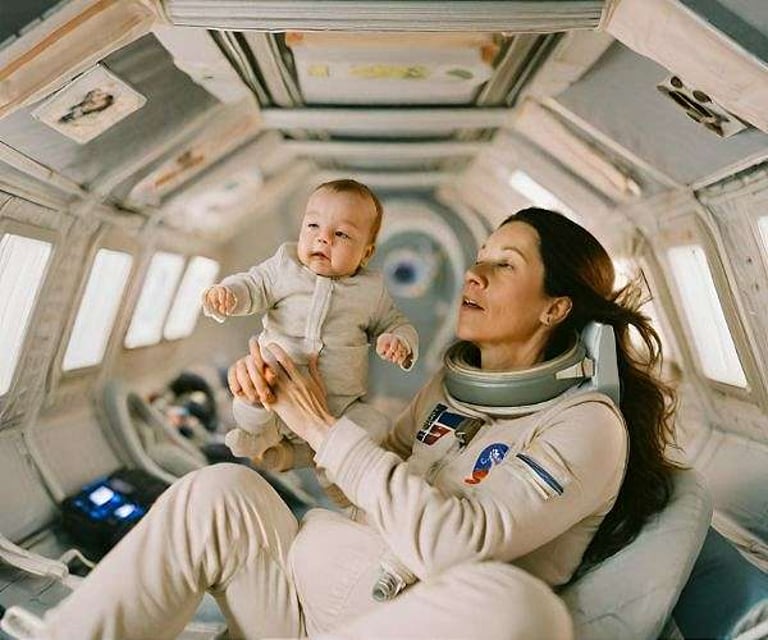

An international, forward-looking push is under way to confront risks to reproductive health in space, including inadvertent pregnancy, radiation and microgravity effects on fertility, and the ethical boundaries for future space reproduction research.
A new report argues that human reproduction in space is a critical unresolved issue for long-duration missions to the Moon or Mars, urging planning now as interest in space exploration grows.
Senior author Dr. Fathi Karouia from NASA describes reproductive health as a policy blind spot and calls for international collaboration to establish guidelines that safeguard both professional astronauts and private citizens as humanity moves toward sustained off-Earth presence.
While assisted reproductive technologies are advancing and increasingly portable, pregnancy remains contraindicated for spaceflight, with hormonal management of menstruation; nonetheless ART could support research and practical space-based reproductive practices.
Automated, portable ART—including gamete preservation, embryo culture, and genetic screening—could align with space operations once ethical and safety frameworks are in place, indicating a path from Earth-based to space applications.
The report treats ART in space as a foreseeable extension of current technologies, emphasizing proactive governance as humanity expands beyond Earth.
The discussion includes adapting IVF and cryopreservation for space use not to enable conception in space but to protect travelers and safeguard reproductive health in spaceflight.
IVF and reproductive technologies are increasingly relevant to space due to advances in assisted reproduction and the growing participation of private citizens alongside professionals on missions.
No pregnancies in space are planned for research; simulations and non-human models will be used, with an international ethics review board urged to oversee global rules and responsible conduct.
Any in-space reproductive research would rely on simulated environments and non-human models to study risks, not on human pregnancy data.
Ethical guidelines are prioritized, including informed consent, transparency, gender equity, and protection of future offspring, with a stance against in-space experiments on pregnant humans.
Safeguards emphasize non-pregnant humans for research, informed consent, fairness, child safety, and reliance on simulations and non-human models until clear guidelines are established.
Summary based on 8 sources
Get a daily email with more Science stories
Sources

Economic Times • Feb 4, 2026
Babies in space: Experts say humans are not ready yet
Gizmodo • Feb 4, 2026
We’re Nowhere Near Ready to Make Babies in Space, Experts Warn
Phys.org • Feb 4, 2026
Reproduction in space, an environment hostile to human biology
Space • Feb 4, 2026
It's time to think about human reproduction in space, scientists urge