Study Unveils Dual-Mechanism Horse Whinny, Enhancing Equine Communication Understanding
February 23, 2026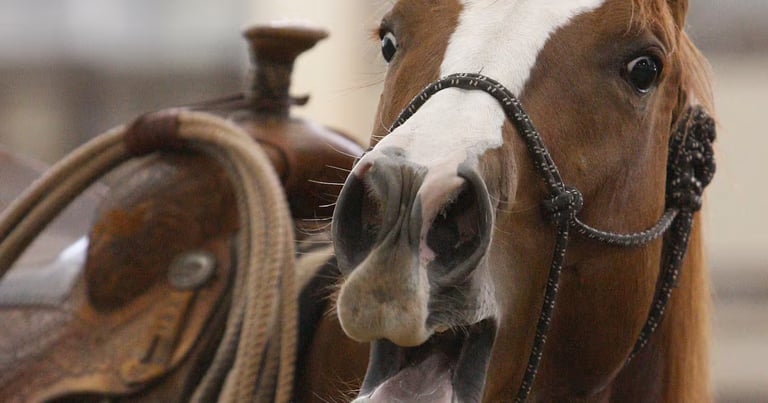

The research, published in Current Biology, is noted by outside experts as novel and potentially significant for advancing our understanding of how horses communicate.
According to study author Elodie Mandel-Briefer, the dual-frequency whinny may allow horses to convey multiple messages at once, expanding the range of emotions expressed during social interactions.
A new study reveals that the horse whinny is produced by two distinct mechanisms: a low-pitched component from air vibrating in the vocal folds, and a high-pitched whistling component that originates in the voice box and escapes through a small opening above it.
Commentators from the University of Connecticut, Rutgers, and the University of Copenhagen highlighted the importance of discovering dual-frequency production and its implications for equine communication.
Briefer and colleagues used endoscopy to visualize laryngeal movements, noted the cartilage above the vocal folds contracting during the call, and conducted ex vivo experiments to replicate the sound, confirming the two-source mechanism.
Summary based on 11 sources
Get a daily email with more Science stories
Sources

The Guardian • Feb 23, 2026
Study reveals whistling secret of horses’ whinny

Yahoo News • Feb 23, 2026
A horse's neigh may be unique in the animal kingdom. Now scientists know how they do it
The Independent • Feb 23, 2026
A horse's neigh may be unique in the animal kingdom. Now scientists know how they do it