Targeted Macrophage Therapy Slows Aging, Improves Health in Mice: A Step Toward Human Applications
July 16, 2026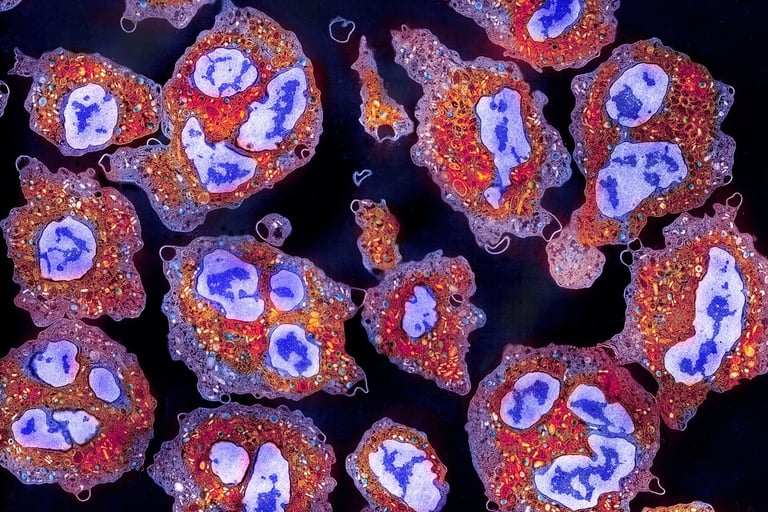

Therapeutically, the work suggests developing a highly selective EP2 inhibitor to restore macrophage phagocytosis without suppressing broader prostaglandin signaling, as an anti-aging approach.
Publication details: Findings appear in Science, reflecting strong translational relevance and multi-institutional collaboration.
Future work will investigate whether EP2 blockade can alter the onset of age-related conditions, including Alzheimer’s disease, in humans.
Safety considerations are key: EP2 participates in normal signaling, so systemic blockade could have unwanted effects, making macrophage-targeted aging therapies potentially safer.
In aging mice, deleting EP2 specifically in tissue-resident macrophages preserves young neutrophil clearance, reduces senescent neutrophil buildup, and improves function across brain, heart, skeletal muscle, liver, kidney, and gut.
Clinically, current NSAIDs reduce PGE2 broadly and can cause adverse effects, underscoring the need for targeted EP2 therapies.
Human data from large liver datasets show parallel age-related patterns—increased neutrophil senescence, reduced macrophage function, and higher EP2 activity—supporting translational relevance.
Across multiple organs in older mice lacking macrophage EP2, inflammation decreases, cognitive performance improves (notably in the hippocampus), visceral fat is reduced, muscle mass is preserved, and 59 of 71 age-related proteins stay in a more youthful profile.
This macrophage-specific EP2 deletion also slows cognitive decline and shifts inflammatory and protein signatures toward youthful patterns, with notable effects on liver-related pathways.
Correlative human observations link higher EP2 activity with more senescent neutrophils in aging liver tissue, aligning with the animal findings but not proving causation.
The research and its human relevance are summarized in a Stanford Science article that notes translational potential and corroborating human data.
The study was conducted at Wu Tsai Neurosciences Institute with Stanford Medicine researchers led by Katrin Andreasson; funding came from NIH, AHA, Knight Initiative for Brain Resilience, Arc Institute, Chan-Zuckerberg Biohub, and a German collaborator.
Summary based on 4 sources
Get a daily email with more Science stories
Sources
News Center • Jul 16, 2026
Breakdown of immune cells’ interaction is key driver in aging, study finds
Neuroscience News • Jul 16, 2026
Macrophage Receptor Blockade Reverses Multi-Organ Aging
BIOENGINEER.ORG • Jul 16, 2026
Immune Cell Interaction Breakdown Drives Aging, New Study Finds
New Scientist • Jul 16, 2026
Restoring ability to remove zombie cells may keep us sharp as we age