Lab-Grown Human Brain Tissue in Mice Sparks Ethical Debate, Shows Memory Improvements
September 16, 2026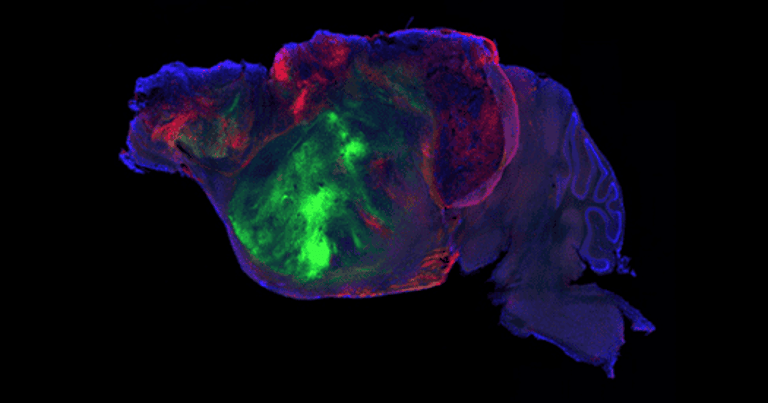


A team transplanted lab-grown human brain tissue, derived from cortical organoids, into bioengineered mice to study human brain development and disease mechanisms, while deliberately limiting scope to address ethical concerns.
Ethical considerations are front and center, focusing on animal welfare and the question of whether grafts could confer human-like consciousness; experts say current data do not indicate consciousness beyond a normal mouse.
Mice with human neurons showed improvements on some memory-related tasks and social interactions relative to depleted controls, but the grafts do not replicate full cortical organization or all brain cell types.
Experts acknowledge the technology’s promise but stress ongoing ethical oversight and the need for societal input as the field advances.
The Nature Briefing podcast invites listeners to subscribe and provides a DOI for the related article.
The 2026 Innovators Under 35 list spotlights nine climate-tech pioneers, illustrating current directions in climate tech and related innovations.
The broader newsletter must-reads cover AI safeguards, model misbehavior, grid-cost shifts, AI forecasting, ad data sharing, global AI investment, biotech partnerships, AI-enabled scams, brain maps linked to dementia, and faster methods to decipher ancient scrolls.
An external expert notes cautious skepticism: technique shows methodological advances but may not replace traditional models or yield major cognitive insights, and raises ethical concerns.
A quote of the day states that AI does not have rights or consciousness and should not be trained to act as if it does.
Papers and tools discussed include Paper2Agent, an AI system that turns papers into executable agents to answer complex queries.
Experts view the model as potentially milestone-worthy for psychiatric and developmental disorder research, but caution about the limits of human-like processing and long-term implications of chimeras.
The work is seen as an early step in synthetic biology, with uncertainty about its medical or cognitive insights and its broader value.
Summary based on 33 sources
Get a daily email with more World News stories
Sources
Ars Technica • Sep 16, 2026
Researchers swap in human brain cells for a mouse's cortex
Yahoo News • Sep 16, 2026
Scientists transplant lab-grown human brain tissue into mice
Stanford University
Researchers create advanced model for studying brain development, disorders