Fungi: The Untapped Allies in Carbon Sequestration and Climate Mitigation
October 24, 2026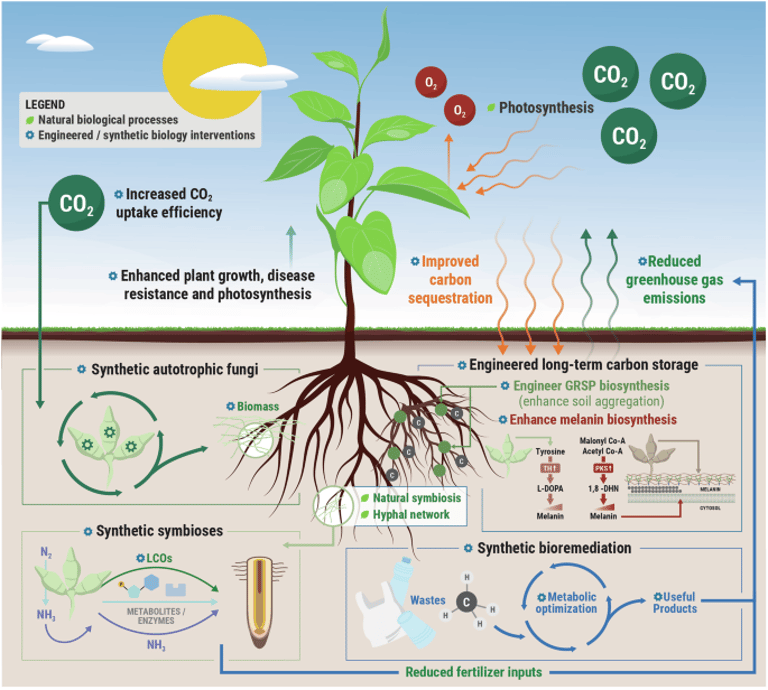

A review highlights that soil-associated fungi, especially mycorrhizal and endophytic guilds, play a major and underexplored role in global carbon sequestration by forming symbiotic relationships with plants that influence soil carbon storage and carbon fluxes.
Fungal traits such as hyphal networks, aggregation, and mineral weathering contribute to long-term carbon stabilization, including the potential formation of carbonate minerals and carbonate precipitation under favorable conditions.
Integrating synthetic biology with soil-associated fungi could enhance long-term carbon storage, pollutant degradation, nutrient exchange, and overall soil health, supporting resilient soil ecosystems and sustainable environmental interventions.
Global warming and climate change affect fungal communities and their interactions with plants, altering fruiting times, growth, and symbiotic outcomes, which in turn may shift carbon dynamics.
Endophytic and urease-producing fungi can contribute to CaCO3 precipitation, linking fungal metabolism to inorganic carbon sequestration, while urease activity presents trade-offs for nitrogen cycling and ammonia emissions.
Estimates suggest fungal-mediated carbon fluxes—about 3.58 gigatons of carbon per year transferred to mycorrhizal networks—are comparable to several nature-based carbon removal strategies, underscoring fungi as a potent yet underutilized climate tool.
Mycorrhizal fungi (AM and EcM) funnel plant-derived carbon into underground networks and differ in their carbon storage impact, with EcM generally boosting soil carbon storage and reducing soil organic carbon respiration in field studies.
The review notes challenges in advancing genetic tools for understudied fungi and outlines synthetic biology pathways—synthetic symbiosis, synthetic autotrophy, and synthetic CO2 assimilation—to enhance soil carbon storage and broader environmental benefits.
Fungal necromass and stabilized fungal-derived residues can persist in soils for multi-year to decadal timescales, contributing to long-term soil organic matter, with persistence influenced by soil minerals and environmental conditions.
Summary based on 1 source