Rare Golden Burbot Found in Lake Ontario Survey, Offering Clues to Great Lakes Ecosystem Health
November 11, 2026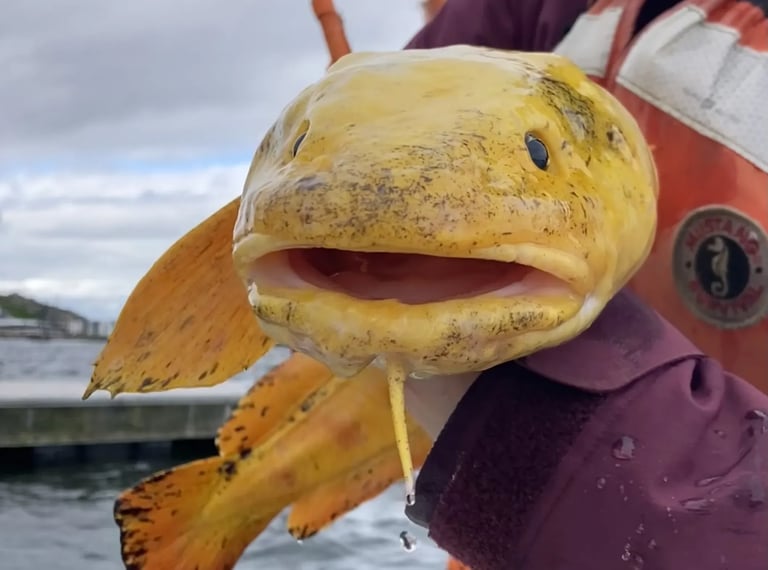

While surveying Oswego Harbor, New York, for invasive species, U.S. Fish and Wildlife Service biologists caught an exceptionally rare yellow-orange burbot, a native Great Lakes fish usually colored green and brown.
The unusual coloring may be caused by xanthochromism, an uncommon condition estimated to occur in roughly one in 10,000 cases and less often in fish than albinism or melanism.
The fish was found through the USFWS Aquatic Invasive Species Early Detection and Monitoring Program, which monitors the Great Lakes for ecological threats using methods including nets, electrofishing and environmental DNA analysis.
USFWS said finding a rare native fish shows the surveys can detect hard-to-find species, including newly arriving invasive ones, though luck also played a part.
USGS fisheries biologists found the burbot emaciated and in poor health; its conspicuous coloring may make hunting in dark water more difficult, though its condition could have several causes.
The fish was sent to Cornell University College of Veterinary Medicine for a detailed health analysis that researchers hope will shed light on Lake Ontario basin burbot populations, which are extremely low, and help guide fisheries management.
Burbot populations across the Great Lakes have declined sharply over the past century, partly because invasive sea lampreys prey on them.
The discovery also highlights how long-term Great Lakes monitoring can document biodiversity, flag unusual biological occurrences and improve understanding of ecosystem health.
Summary based on 7 sources
Get a daily email with more Science stories
Sources

Gizmodo • Nov 11, 2026
Biologists Caught a Rare Golden Fish in New York—and It’s Good News for the Great Lakes
Popular Science • Nov 11, 2026
‘Exceptionally rare’ yellow fish found in New York
FOX 5 New York • Nov 11, 2026
Rare yellow burbot stuns biologists in NY harbor: 'One-in-a-million catch'
FOX Weather • Nov 10, 2026
'One-in-a-million' bright yellow fish discovered in New York in stunning find