Epigenetic Forces Drive Centromere Stability in Elephant Grass Amidst Genome Evolution
April 13, 2026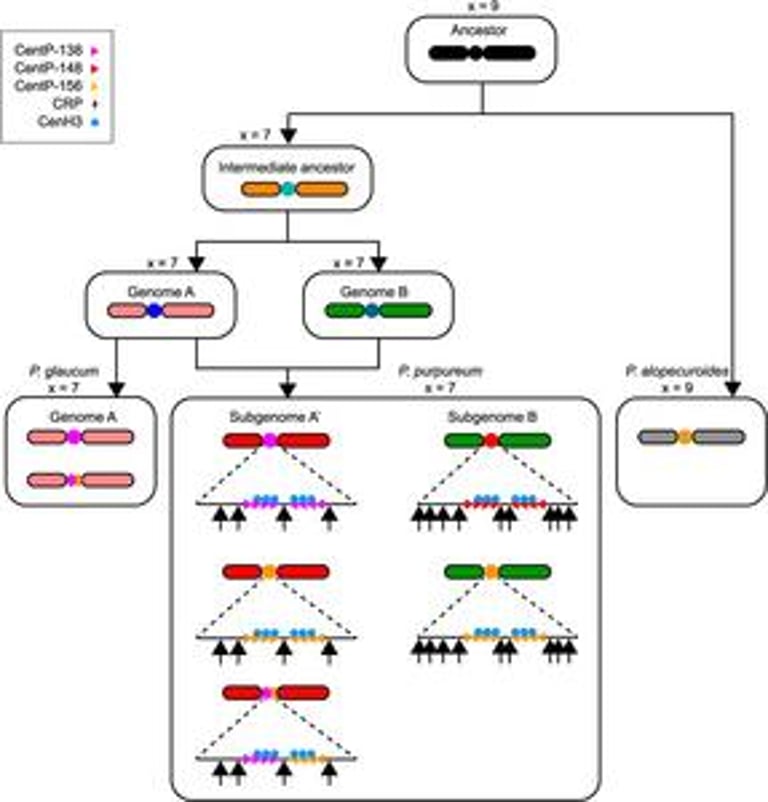


Findings indicate centromere identity hinges more on epigenetic regulation than fixed DNA sequences, with conserved epigenetic marks supporting chromosome stability amid rapid genetic changes following genome duplication.
A near-complete allotetraploid elephant grass genome assembly resolves all 14 centromeres, enabling detailed study of centromere evolution after genome duplication.
Unequal expansion of long terminal repeat retrotransposons reshaped chromosomal architecture differently in the two subgenomes, driving structural divergence after hybridization and influencing genome evolution on a large scale.
New centromeric retrotransposons increase local sequence variability but become gradually homogenized, implying an evolutionary cycle that balances innovation with functional stability.
The assembly, integrating PacBio HiFi sequencing with Hi-C data, achieves greater genome continuity and accuracy, resolving telomeres and closing most gaps relative to prior references.
Elephant grass’s status as a key forage and emerging bioenergy crop means improved genomic resolution will speed gene discovery, molecular breeding, and precision genome editing for resilient varieties.
Centromeric satellite repeats (CentP) show rapid diversification across chromosomes and subgenomes, signaling dynamic DNA evolution at centromeric regions.
Despite broad genetic variation, centromere epigenetic features remain remarkably conserved, with CENH3 consistently marking functional centromeres and chromatin modification patterns similarly enriched across subgenomes.
Providing complete centromere resolution offers critical insights into stabilizing complex polyploid plant genomes after hybridization, with implications for crop improvement and genome engineering.
Summary based on 1 source
Get a daily email with more Science stories
Source
EurekAlert! • Apr 13, 2026
Scientists decode the dynamic heart of elephant grass chromosomes