Chile's Lithium Leadership at Risk: Governance Hurdles and Indigenous Engagement Needed
December 2, 2025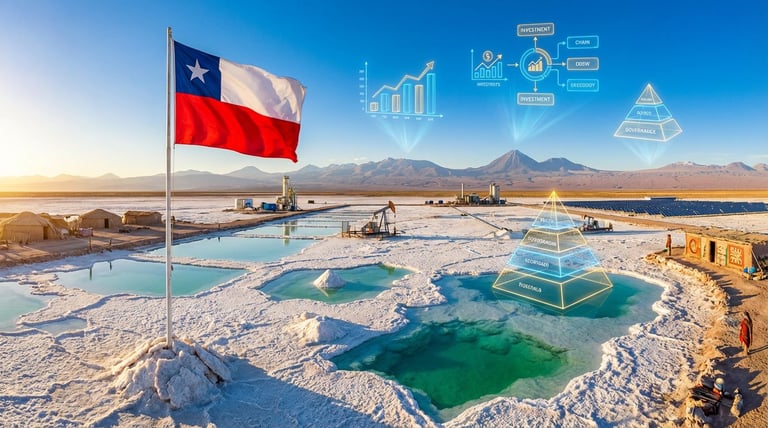

Chile’s two‑tier governance framework allows private ownership for pre‑1979 concessions, yet modern projects face mandatory 51% state ownership, unclear terms, overlapping jurisdictions, and environmental and permitting processes that can take 18 to 24 months.
Processing capacity is concentrated in SQM and Albemarle plants, with 20,000 tonnes of annual capacity requiring up to $1.5 billion in capex, which constrains downstream value addition and domestic cathode manufacturing.
Fragmented property rights, especially on high‑value salt flats like Maricunga and Salares Altoandinos, create high acquisition costs and litigation, hindering project scale and viability.
Chile can sustain leadership in lithium only by resolving governance bottlenecks, clarifying property rights, and boosting indigenous and community engagement to unlock investment, scale operations, and balance state revenue goals.
With more than half of global lithium reserves, Chile aims to capitalise on its position, but constitutional, regulatory, and governance barriers are limiting private participation and long‑term development.
Lithium is designated a non‑concessionable strategic mineral, requiring CEOLs with state majority ownership; no new CEOLs have been awarded since 2023 due to regulatory paralysis.
Global supply dynamics could see 300,000–500,000 tonnes of lithium produced by 2030, up from today’s 200,000 tonnes, but governance uncertainties may push buyers toward Australia or Argentina for diversification.
Regulatory paths range from liberalisation with more private access and constitutional reforms to state consolidation or hybrid models, each with different implications for timelines, innovation, and revenue.
Rigorous environmental requirements—groundwater monitoring, 70% renewable energy targets by 2030, land restoration bonds, and lengthy impact assessments—prolong project timelines.
Revenue models favor state participation with 51% ownership, 3–8% royalties plus export taxes and technology transfers, but approval delays hinder long‑term revenue potential.
Indigenous rights and consultations add complexity and timelines; examples like Wealth Minerals show community benefits can occur without state contracts, signaling possible misalignment with regulatory approvals.
Technical feasibility varies by salt flat: Maricunga has high lithium concentration but heavy fragmentation; Quillagua faces aridity and water access limits; Ascotán offers potential with lower concentrations but governance is multi‑stakeholder and complex.
Chile’s strong reserve position is challenged by higher costs, regulatory bottlenecks, and limited processing capacity, making it difficult to maintain leadership against Australia and other competitors.
Summary based on 1 source
Get a daily email with more Macroeconomics stories
Source

Discovery Alert • Dec 1, 2025
Chile’s Lithium Governance Crisis: Constitutional and Regulatory Barriers in 2025