Bank of Korea Holds Rate Steady, Lifts Growth Forecast Amid Semiconductor Surge
February 26, 2026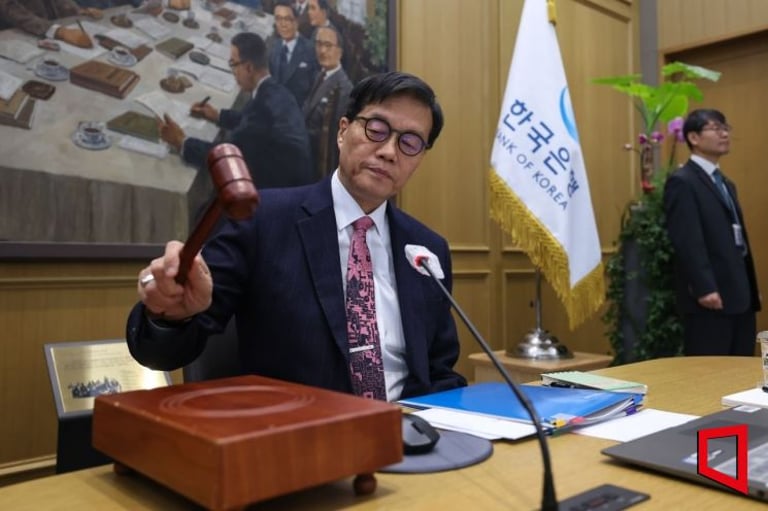

The central bank expects 2026 growth to surpass current projections on solid chip demand from Samsung Electronics and SK Hynix, despite lingering trade uncertainties and potential shifts in U.S. tariff policy.
Risks to the outlook include semiconductor cycle volatility, domestic demand recovery pace, major-country policy shifts, tariffs, and geopolitical risks, with monetary policy remaining supportive while monitoring inflation and financial stability.
Financial stability monitors note the won-versus-dollar moves amid capital flows, rising market volatility despite higher stock prices, and only modest growth in household lending under macroprudential rules.
Non-IT sectors like construction may lag, potentially tempering overall growth even as the semiconductor-led upswing continues.
The BoK expects real estate stability to stay cautious and will watch inflation, financial stability, and growth without adding liquidity to boost property prices.
Domestic demand: private consumption gradually recovers, construction investment remains weak, while exports and facility investment are forecasting stronger momentum.
Despite optimism, housing-market concerns persist with rising household debt and Seoul property prices continuing to trend upward.
The BoK has signaled a prolonged pause in its easing cycle dating back to late 2024 to manage currency volatility and debt risks, keeping policy restrictive until conditions warrant change.
The Bank of Korea held the base policy rate at 2.5% for the sixth consecutive meeting, while lifting this year’s growth forecast from 1.8% to 2.0, citing robust semiconductor exports and improved consumption.
The BoK’s February decision aligned with market expectations, reinforcing a wait-and-see stance amid a semiconductor-led upturn.
This extended pause aims to balance currency stability with financial risk containment while monitoring inflation and growth.
Supportive factors include favorable global trends and delayed tariffs, with government consumption and investment contributing to upward economic pressure.
Summary based on 7 sources
Get a daily email with more Macroeconomics stories
Sources

Investing.com • Feb 26, 2026
S.Korea central bank holds rates, adopts dot-plot path signalling extended pause
Investing.com • Feb 26, 2026
Bank of Korea holds rates at 2.50% as expected
korea joongAng daily • Feb 26, 2026
BOK raises growth forecast to 2% while holding rate steady