French Economy Grows Amid Global Tensions; Inflation and Supply Chain Strains Loom
April 14, 2026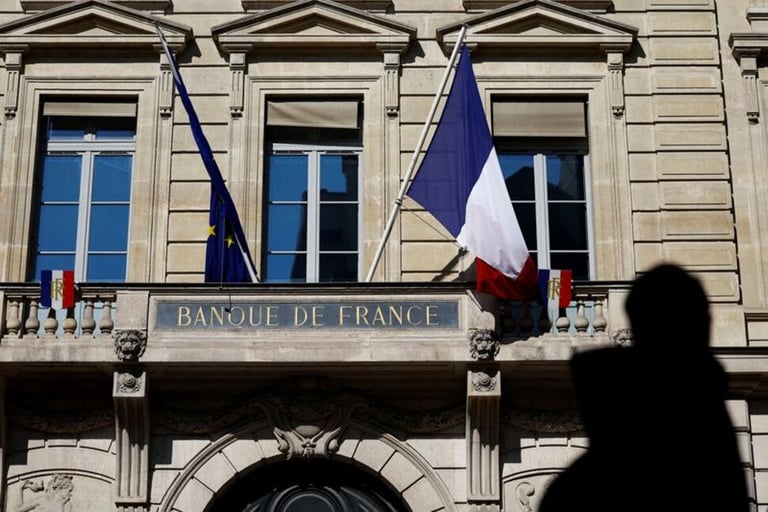


March activity remained solid across industry, services, and construction, with manufacturing supported by aeronautics, nuclear power, and defense.
March activity stayed steady across industry, services, and construction, with manufacturing aided by aeronautics, nuclear power, and defense.
The Bank noted the conflict in the Middle East weighed on sentiment and raised uncertainty indicators to levels seen during the early Russia-Ukraine invasion.
The Middle East conflict weighed on sentiment and pushed uncertainty indicators for April to levels seen earlier in the Russia-Ukraine invasion period.
France’s economy grew 0.3% in the first quarter, up from 0.2% in Q4, according to the Bank of France.
Inflationary pressures from cost increases are likely to push more firms to raise prices, with price-hiking expectations rising from 11% of industrial firms in March to an anticipated 23% in April.
Price pressures are increasing, with expectations that more firms will raise prices in April; March saw 11% of industrial firms raising prices, projected to rise to 23% in April.
Supply-chain strains re-emerged, particularly for petroleum-based inputs like plastics and solvents, due to transport disruptions and higher energy costs.
The central bank maintains a 0.9% growth forecast for France this year despite Middle East tensions.
The central bank maintains its forecast for 0.9% GDP growth in 2026 despite Middle East tensions.
Services and building activity stayed broadly supportive, contributing to overall resilience.
Services and construction activity also stayed broadly supportive, contributing to overall growth.
Summary based on 2 sources
Get a daily email with more Macroeconomics stories
Sources

U.S. News & World Report • Apr 13, 2026
French Central Bank Sees First Quarter Growth of 0.3%
Investing.com • Apr 13, 2026
French central bank sees first quarter growth of 0.3%