Breakthrough: Modified RNA's Secret to Evading Immune Detection Uncovered
July 1, 2025

These Toll-like receptors are crucial components of the innate immune system, as they detect foreign RNA and trigger immune responses against pathogens.
A team of researchers from LMU, led by Professors Veit Hornung and Thomas Carell, has made a significant breakthrough in understanding how modified RNA evades detection by the innate immune system's pattern recognition receptors.
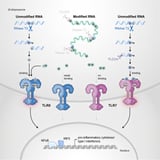
Their study, published in the journal Cell, reveals that modified RNA containing pseudouridine is less effectively processed by lysosomal enzymes, which prevents recognition by Toll-like receptors TLR7 and TLR8.
These findings provide a foundation for further development of RNA-based drugs and enhance our understanding of why the body's own RNA is not attacked by the immune system.
The research explains the mechanism behind the reduced inflammation observed with modified mRNA, which is essential for the development of RNA therapeutics and mRNA vaccines, including those for COVID-19.
The authors emphasize the importance of understanding the role of pseudouridine in the immune response, highlighting potential avenues for the development of targeted RNA-based drugs.
Pseudouridine is a common RNA modification found in vertebrates, and its presence in synthetic mRNA has been shown to significantly reduce immune responses, aiding in vaccine development.
Summary based on 2 sources
Get a daily email with more Science stories
Sources
Medical Xpress • Jul 1, 2025
How modified RNA tricks the innate immune system
News-Medical • Jul 1, 2025
Researchers uncover how RNA modifications evade immune detection