Breakthrough: PTGES3 Identified as Key Regulator and Therapeutic Target in Advanced Prostate Cancer
November 6, 2025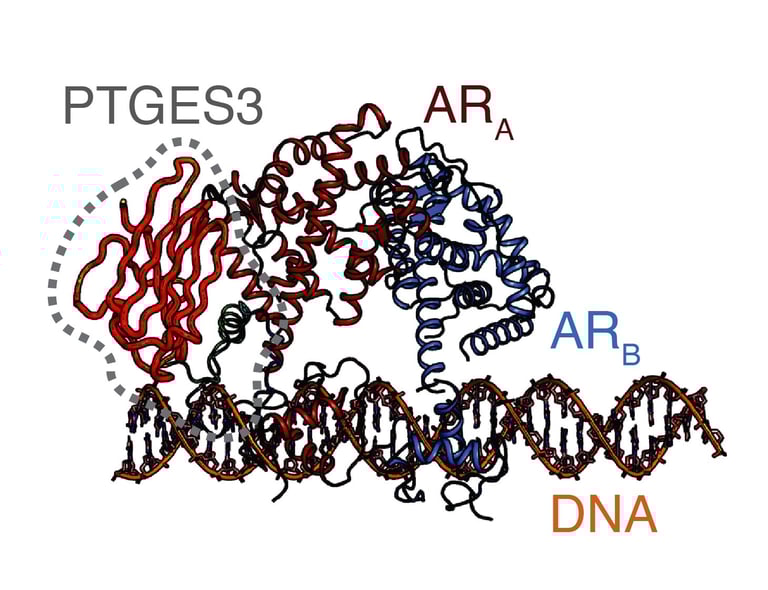

Using a genome-scale CRISPR interference screen with a live endogenous AR reporter, the team uncovers regulators of AR protein levels and activity in advanced prostate cancer.
Patients with high PTGES3 expression have poorer outcomes on hormone therapy, pointing to PTGES3 as a potential prognostic marker and therapeutic target.
In addition to confirming known regulators like HOXB13 and GATA2, the study spotlights PTGES3 as a particularly novel and impactful regulator.
PTGES3 represents a potential therapeutic target to overcome resistance to AR-directed therapies, offering a new treatment avenue for prostate cancer.
PTGES3 appears to influence AR levels and activity through dual mechanisms: stabilizing AR protein in the cytoplasm and acting as a nuclear co-factor to promote DNA binding and target gene activation.
The article honors the late Felix Feng, a co-senior author, whose contributions are acknowledged by the team.
The study highlights the value of CRISPR-based, quantitative approaches to uncover regulators of transcription factors and may inform similar efforts for other hormone-driven cancers.
A CRISPR screen conducted by researchers at Arc Institute, UCSF, and Fred Hutchinson identifies PTGES3 as a regulator of androgen receptor (AR) signaling in advanced prostate cancer.
Mouse experiments show that silencing PTGES3 delays tumor growth and lowers AR levels, supporting its therapeutic potential in hormone-refractory disease.
PTGES3 emerges as a top regulator of AR, where its repression leads to loss of AR protein, cell-cycle arrest, and cell death in AR-driven prostate cancer models.
Researchers are pursuing structural details of PTGES3-AR interactions and exploring therapeutics, including protein degradation strategies, to disrupt this axis.
Clinical analyses show higher PTGES3 expression correlating with resistance to AR-targeted therapies, suggesting PTGES3 contributes to therapy failure.
Summary based on 2 sources
Get a daily email with more Science stories
Sources
Medical Xpress • Nov 5, 2025
CRISPR screen identifies new regulator of androgen receptor in prostate cancer