Ancient Genomes Uncover Southern Africa's Unique Role in Human Evolution
December 3, 2025

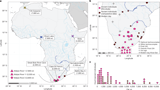
Southern Africa shows long-term partial isolation of human populations, as revealed by 28 ancient genomes spanning from about 10,200 to 150 years ago.
Analyses place ancient southern Africans at one end of genetic variation, forming a distinct cluster separate from modern Khoe-San groups and other Africans, indicating deep historical population stratification.
Modern Khoe-San carry substantial recent admixture, yet even the least-admixed genomes retain the majority ancient southern African ancestry (about 79%), with the last unadmixed individuals likely gone in recent centuries; Ju/’hoansi and Karretjie are closest to ancient southern Africans.
Among the identified variants, seven relate to kidney function, potentially tied to thermoregulation and fluid balance, suggesting a genetic basis for sweating and endurance that may have helped Homo sapiens distinguish themselves from Neanderthals and Denisovans.
The study identifies 79 Homo sapiens–specific genetic variants not shared with Neanderthals, Denisovans, chimpanzees, or gorillas, present in both living and prehistoric humans, underscoring unique human evolution markers.
Findings support a combinatorial model of human evolution, with modern Homo sapiens arising from multiple divergent populations with different genetic mixes rather than a single uniform lineage.
Ancient southern African genomes contain about half of all human genetic variation observed globally, shedding light on variants important to evolution, including those related to kidney function and brain development.
Other variants affect immune system genes and neuron growth, highlighting brain development and attention, with implications for regionally rooted cognitive traits seen in the southern African archaeological record around 100,000 years ago.
Some gene variants common to all modern Homo sapiens predate 300,000 years ago, including kidney-related and brain-development/immune genes, indicating a broader scope of early human evolution.
At Matjes River Rock Shelter, cultural layers show changing tool-making techniques, yet individuals remain genetically similar across periods, signaling cultural shifts without major population replacement.
Experts caution that the southern African lineage represents a piece of a larger, still incomplete African human-evolution puzzle, and more research is needed to connect regional histories to the broader Homo sapiens story.
Analysis of 28 Holocene-era individuals from Limpopo south shows seven complete genomes with fixed traits for skin pigmentation and eye color, but lacking malaria-protective or African sleeping sickness–related variants, indicating different selective histories.
Summary based on 4 sources
Get a daily email with more Life Sciences stories
Sources
Nature • Dec 3, 2025
Homo sapiens-specific evolution unveiled by ancient southern African genomes

Phys.org • Dec 3, 2025
10-thousand-year-old genomes from southern Africa change picture of human evolution
Science News • Dec 3, 2025
Ancient southern Africans took genetic evolution in a new direction